
60-Minute Express Pest Control (Mumbai to Thane)
Pest emergency and can't wait days for an appointment? Along the Dahisar-to-Andheri (Mumbai) and Thane corridor, our team aims to reach you within 60 minutes of your call - for pest control (residential, commercial and restaurants) and Rat Guard installation.
- Odourless, child & pet safe
- 24×7 · 31 branches
- 100% satisfaction guarantee
Some pest problems can wait for a scheduled visit. Others can't - a sudden cockroach swarm before guests arrive, a rat seen in a kitchen mid-service, a bed bug find the night before a big day. For those, a same-week appointment isn't good enough.
For the Dahisar-to-Andheri (Mumbai) and Thane corridor specifically, our express team aims to reach you within 60 minutes of your call, for pest control and Rat Guard installation.
What Counts as an Express Case
The 60-minute response is built for situations where waiting makes the problem worse, not for routine or preventive visits.
- A sudden, visible pest sighting - especially somewhere guests, customers or family will see it
- A restaurant or commercial kitchen with pest activity during or right before operating hours
- A rat or rodent entry point discovered that needs a guard fitted before it's used again
- Any situation where the pest problem is actively getting worse by the hour
Coverage Area
The 60-minute response specifically covers the Dahisar-to-Andheri stretch of Mumbai and Thane - the corridor our express team is positioned to reach quickly. Outside this zone, every branch still provides same-day service and a free inspection; it just won't be inside the 60-minute window.
What the Express Visit Covers
The express team is equipped for two things specifically: standard pest control call-outs, and Rat Guard installation.
- Residential pest control - a pest sighting inside a home that needs an immediate response
- Commercial and restaurant pest control - kitchens, dining areas and food-handling spaces where a pest sighting is a direct business risk
- Rat Guard installation - fitting a guard on an exterior pipe before a rodent uses it again
How It Works
Call or WhatsApp the number on this page directly and say it's an express case - the team dispatches immediately rather than booking a future slot. On-site, the visit starts with identifying the immediate issue and applying an initial treatment or fix; a fuller inspection and any follow-up plan is scheduled from there if needed.
Why This Exists
Most pest control operates on a booking-and-wait model, which works fine for prevention but badly for an active, visible problem. This service exists specifically for the gap between 'I have a pest problem' and 'someone is actually on site dealing with it.'
How Fast an Infestation Can Take Hold
Most pest problems don't stay small for long, which is part of why a same-day response matters. A single German cockroach female can produce an egg case carrying 30 to 40 eggs, and she can generate a new case roughly every three to four weeks. Under warm, humid conditions like those common across Mumbai and Thane for much of the year, those eggs hatch in about a month and reach maturity within two to three months — meaning a handful of roaches spotted behind a kitchen unit can become a self-sustaining population within a single season if left alone.
Rodents follow a similar curve. Mice and rats have gestation periods of around three weeks, litters that can run into double digits, and offspring that themselves reach breeding age within five to eight weeks. A pair of rats that finds its way into a godown or building shaft can, in theory, be responsible for dozens of descendants before the quarter is out. Bed bugs are slower to notice but no less prolific — a female can lay several eggs a day and several hundred over her lifetime, with nymphs maturing to breeding adults in about a month.
This is the practical case for treating pest sightings as time-sensitive rather than something to schedule around a convenient week. The gap between "I saw one" and "there's a colony" is often measured in weeks, not months, which is exactly the window an express response is built to close.
Reading the Early Warning Signs
Different pests leave different calling cards, and knowing what to look for is often what prompts someone to call for an urgent visit in the first place rather than waiting. Cockroach activity typically shows up as droppings that resemble ground coffee or black pepper along skirting boards and inside cabinets, a persistent musty smell in enclosed spaces, and roaches seen moving in daylight — a sign the hidden population has outgrown its usual hiding spots. Rodents announce themselves through gnaw marks on packaging, wiring, or wood, dark greasy smudges along the base of walls where they habitually travel, and droppings concentrated near food storage or behind appliances.
Termites are quieter and more easily missed until the damage is already structural: mud tubes running up foundation walls or wooden posts, timber that sounds hollow or feels soft when tapped, discarded wings near windowsills after a swarm, and paint that blisters or bubbles without an obvious moisture source. Bed bugs leave small rust-coloured stains on bedsheets, tiny dark spotting along mattress seams, and shed skins in the folds of upholstery.
Beyond the nuisance factor, several of these signs point to genuine health and property risk. Cockroach allergens and shed skin particles are well documented triggers for asthma and allergic reactions, particularly in children. Rodent droppings and urine can carry pathogens, and in flood-prone urban settings rodent-contaminated water is a recognised route for illnesses such as leptospirosis. Termite colonies, left undetected, cause slow but cumulative structural damage to wooden fittings, door frames, and in older buildings, load-bearing timber — damage that is far cheaper to stop early than to repair later.
None of these signs require special equipment to notice — they just require knowing what to look for, and treating an early sighting as reason enough to act rather than wait it out.
Why Urgent Calls Cluster Around the Monsoon
Across the Mumbai to Thane corridor, pest activity is not evenly spread through the year — it tracks closely with humidity and rainfall. The monsoon months bring sustained high moisture indoors and out, and that combination is favourable to several common household pests at once. Cockroaches breed faster in warm, humid conditions and are drawn indoors by waterlogging outside. Mosquito breeding accelerates wherever water collects and stagnates, even in small amounts — a blocked terrace drain or a neglected planter saucer is enough.
Rodents also shift behaviour during heavy rain. Flooding and waterlogging displace them from drains, gardens, and ground-level burrows, and they move into buildings seeking dry shelter, often through gaps around pipework or under doors that seemed adequately sealed the rest of the year. Subterranean termites, which need consistent moisture to survive, also tend to become more active as soil moisture rises, which is part of why swarms are more commonly reported just before or during the rains.
This seasonal pattern is a genuine, well-established feature of pest behaviour in humid coastal climates, not something specific to any one service provider — but it does explain why urgent, same-day requests tend to spike during the monsoon stretch in this region, and why treating a sighting quickly during these months matters more than it might in a drier season.
Treatment That Doesn't Ask You to Rearrange Your Day
A fast response only solves half the problem if the treatment itself then requires the household or business to shut down for hours or days afterward. This is where the odourless, WHO-approved formulations used across SSD's treatments matter specifically in an express context: there's no need to vacate the property, pack up a family for the afternoon, or shift a shop's operating hours around the visit. The technician can treat the affected areas while people, children, and pets remain on the premises.
That distinction is worth being explicit about, because it isn't universal to pest control. Older or more aggressive treatment methods — particularly fumigation-style approaches — typically do require a property to be sealed and empty for a set period, sometimes overnight. For someone calling in because of an active, urgent problem, being told to also arrange alternate accommodation defeats the purpose of an urgent booking. An odourless treatment that's safe to remain around removes that second obstacle entirely.
It's also why the free inspection and written quote that precede every job matter even in an express slot — a technician confirms what's actually present and what treatment is appropriate before anything is applied, rather than defaulting to a one-size-fits-all approach under time pressure.
After the Visit: What Realistic Recovery Looks Like
An express visit is built to address an active, immediate problem — it is not always the end of the story, and it helps to know what to expect afterward rather than assume one visit permanently resolves every case. Surface-level activity, such as an isolated cockroach sighting or a single rodent entry point, often does clear up after one thorough treatment. Deeper infestations — an established termite colony, or a rodent population that has been breeding undetected for months — are more likely to need a short follow-up visit to confirm the treatment has taken full effect, since some pests retreat further into voids or wall cavities before dying off rather than appearing immediately.
In the days immediately after treatment, it's normal to see a temporary uptick in pest activity as insects are flushed out of hiding spots — this is generally a sign the treatment is working, not that it has failed. Sweeping up and disposing of dead pests, keeping food stored in sealed containers, and avoiding harsh cleaning of treated skirting boards or cracks for the period the technician advises all help the treatment continue working rather than being washed away prematurely.
Because pests are opportunistic and re-entry points — a gap under a door, a damp patch near a drain, a neighbouring property with its own unresolved problem — don't disappear on their own, a single treatment addresses the population that exists today rather than guaranteeing against a future one. This is the practical reason recurring protection through an AMC plan exists: it turns pest control from a reactive, emergency-only call into a maintained baseline, with the same rapid-response option still available if something unexpected turns up in between scheduled visits.
Related services
All 21 services →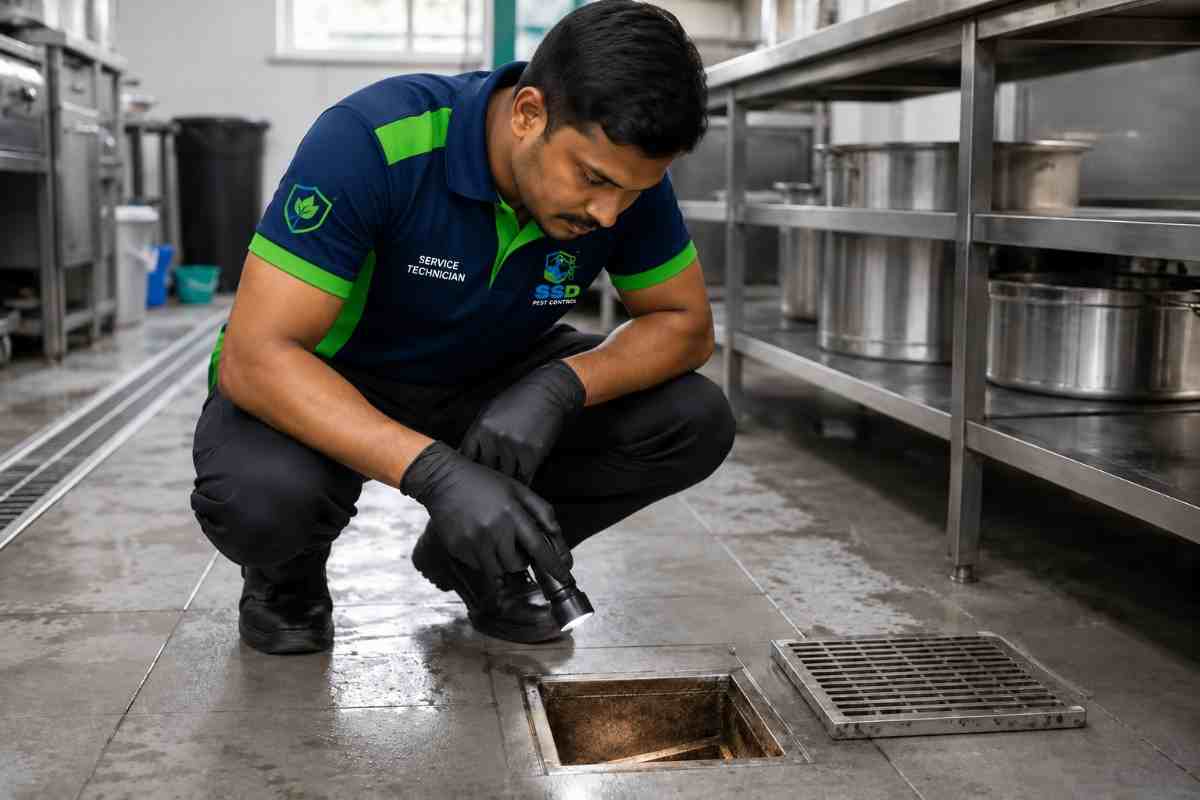 Commercial Pest Control Services
- Protect Brand Reputation: Visible pests can drive away customers and clients. - Ensure Hygiene & Safety: Pests carry bacteria and diseases that endanger staff and customers. - Prevent Property Damage: Termites, rodents, and insects can destroy infrastructure, inventory, and electronics. - Stay Leg
Learn more- Pest Control for Hotels
Hotels carry a different kind of pest risk than any other business - one guest complaint about a bed bug or a cockroach in the lobby can cost far more than the treatment itself. Scheduled, discreet pest control built around occupancy and guest experience, not just the pests.
Learn more 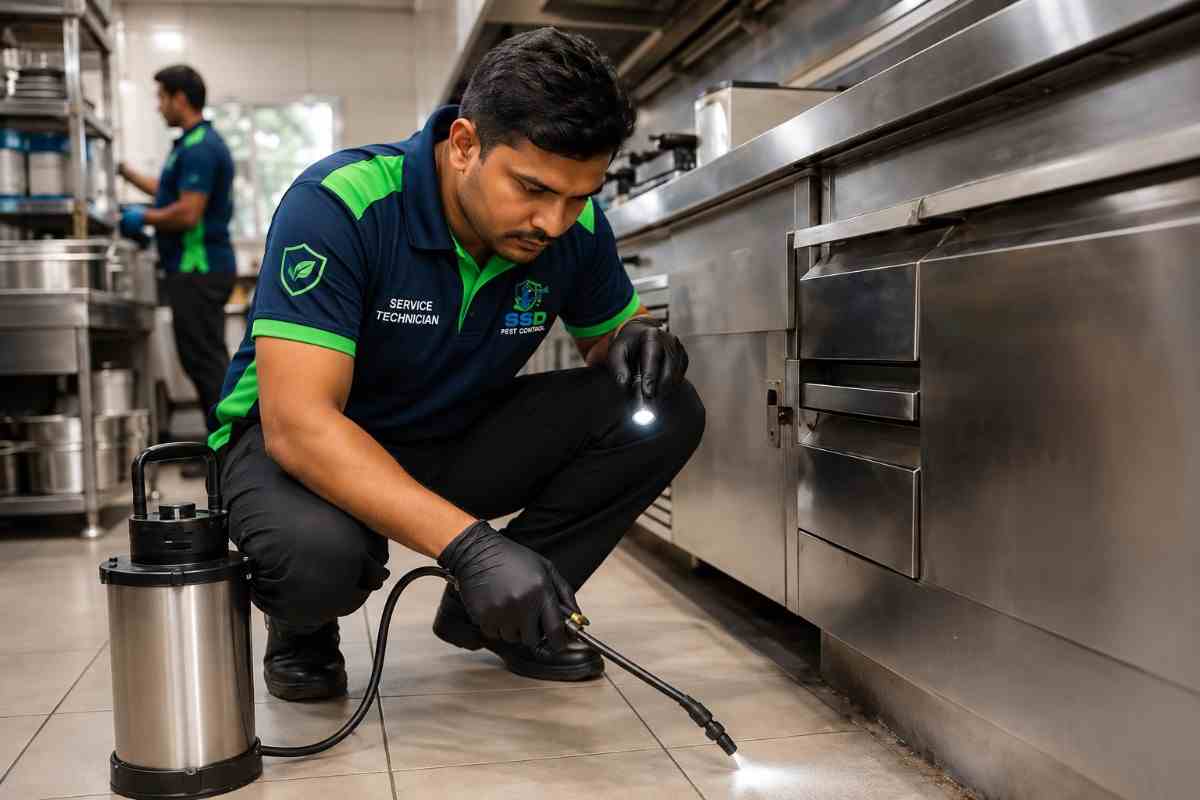 Pest Control for Restaurants
A single pest sighting in the dining area, or a failed FSSAI inspection, can shut a restaurant down or wreck its reviews overnight. Scheduled pest control built around kitchen compliance and service hours - not a one-time spray.
Learn more
Get your space pest-free
Free inspection, fixed quote, 100% satisfaction guarantee - across all 31 branches, 24×7.