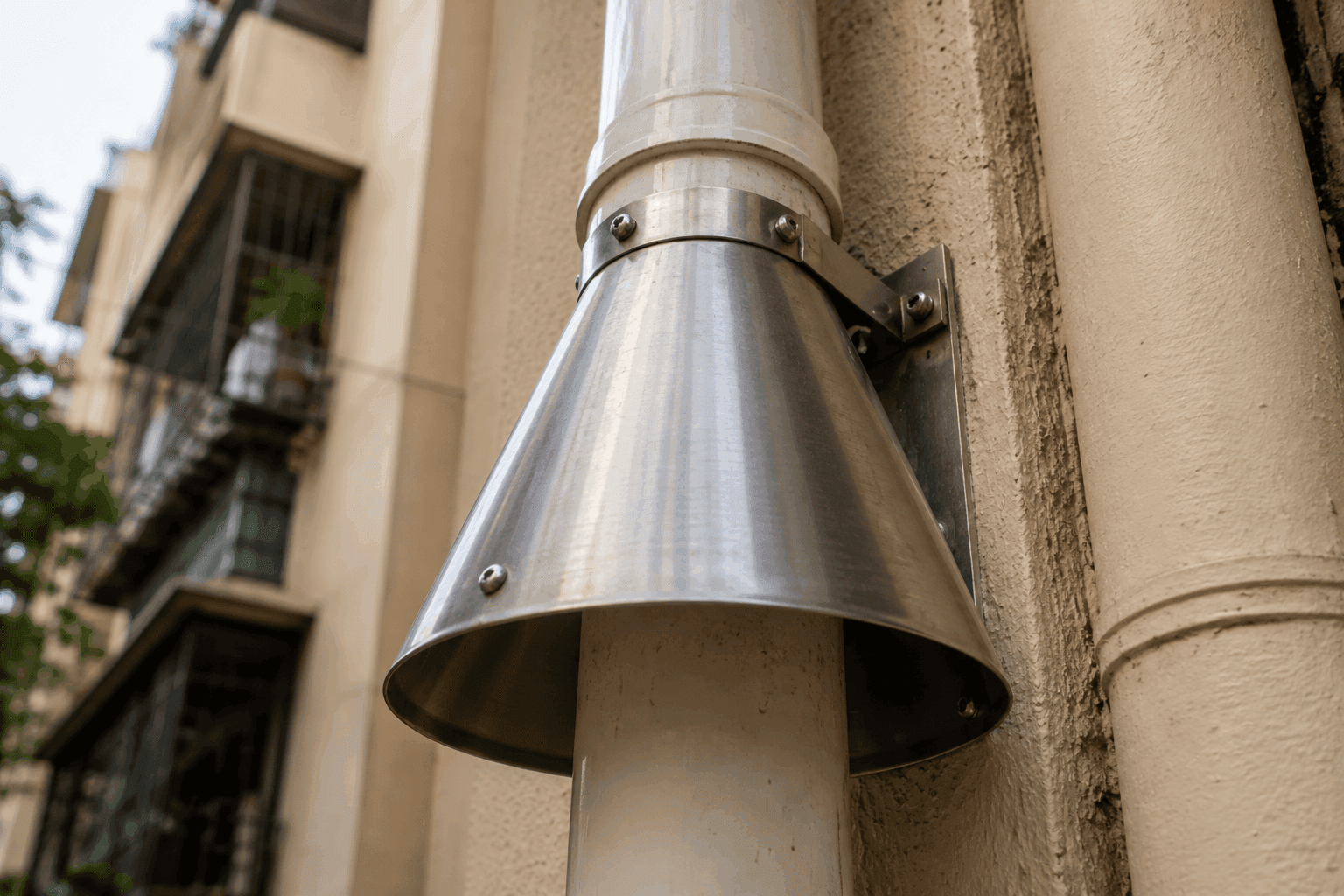
Rat Guard for Pipe Services
Rats and mice use exterior drain pipes, soil stacks and downspouts as a direct climbing route into buildings. A rat guard is a cone or dome-shaped stainless steel, galvanized or PVC barrier fitted around the pipe to physically block that climb - no bait, no chemicals, just a permanent obstacle.
- Odourless, child & pet safe
- 24×7 · 31 branches
- 100% satisfaction guarantee
Exterior drain pipes, soil stacks, downspouts and cable risers give rats and mice a ready-made ladder to a building's roof, balconies and upper floors. Once a rodent is on the pipe, the nearest wall gap, window ledge or roof void is only a short climb away.
A rat guard is a simple physical barrier - usually cone or dome-shaped - fixed around the pipe at the right height and position so a climbing rodent hits a smooth, oversized surface it cannot grip or bypass.
Because it works on physics rather than poison, a correctly sized and positioned rat guard keeps working for years with no repeat visits needed, making it one of the more permanent pieces of rodent-proofing a building can have.
What Is a Rat Guard for Pipes?
A rat guard (also called a pipe rodent guard or rat baffle) is a cone or dome-shaped barrier fitted around a vertical pipe, cable riser or downspout on the outside of a building. It clamps or straps around the full circumference of the pipe so that its rim projects well beyond the pipe's own surface.
The shape does the work. A rat or mouse climbing the pipe reaches the guard, finds a smooth, outward-sloping surface with nothing to grip, and cannot reach around or over it to continue upward. It is a purely mechanical barrier - no bait, no chemical, nothing for the rodent to eat or avoid - which is what makes it a permanent fixture rather than a treatment that needs repeating.
Why Buildings Need Rat Guards on Pipes
Exterior drain pipes, soil stacks, rainwater downspouts and cable conduits are among the most commonly documented entry routes rodents use to reach upper floors, balconies, terraces and roof voids. Rats can climb the outside of a vertical pipe by bracing themselves against the adjoining wall, and can climb the inside of pipes up to roughly 100 mm in diameter outright - so the pipe itself doesn't need to be damaged for it to become a ladder into the building.
Older cast-iron or corroded pipework is an easier climb still, since a rough, pitted surface gives claws something to catch on. Once a rodent is on the roof or at a window ledge, it only takes a small gap - around a meter box, an AC pipe sleeve, a false ceiling void or a loose roof tile - to get inside. From there the risks go beyond nuisance: chewed wiring is a fire hazard, and rodent urine and droppings are linked to the spread of leptospirosis, salmonella and hantavirus.
- Rub marks or greasy smudges running up the outside of a pipe
- Gnaw marks on the pipe, on nearby cable insulation, or on the guard itself if one is already fitted
- Droppings collecting at the base of a pipe or on a ledge just above it
- Scratching or movement heard in the ceiling void directly above an exterior pipe run
- Rodents seen on a balcony, terrace or upper floor with no ground-level entry point found nearby
How Installation Works
Installation starts with a walk of the building's exterior to map every vertical pipe, downspout, cable riser and conduit that touches an outside wall - not just the obvious drain stack, since a single missed pipe is all a rodent needs.
Each guard is then sized to the pipe's actual outer diameter, because a loose or undersized guard leaves a gap a rodent can squeeze past, while an oversized one won't sit securely. The guard is positioned high enough off the ground to be out of jumping range, and - just as importantly - below any point where a rodent could bypass it entirely, such as a bracket, a bend, an adjoining wall, a ledge, or a branch pipe joining the main stack. Where a pipe has more than one such point, more than one guard goes on.
The guard is then fixed in place with clamps, straps, screws or cable ties strong enough that it can't be pushed loose, rotated out of position, or worked around over time - a guard that shifts even a few centimetres stops doing its job.
Materials Used
Stainless steel and galvanized sheet metal are the standard materials for exterior rat guards, because they hold their shape, resist rust through monsoon exposure, and can't be chewed through the way a softer material can - an important property, since a determined rodent will test any surface it can reach.
PVC guards are also used, typically where cost or weight is a bigger factor than long-term weather exposure, or on pipes in more sheltered locations. In coastal, high-humidity or heavily exposed settings, metal - particularly stainless steel - is generally the more durable choice.
Properties and Pipe Types That Need This Service
Any building with an exposed vertical pipe running up an external wall is a candidate, but the risk is highest wherever pipework, foot traffic and food or waste come together.
- Residential buildings and housing societies with exposed soil, drain or rainwater pipes on an outer wall
- Commercial kitchens and restaurants, where floor-drain outlets and grease-trap pipework are a known rodent route
- Godowns and warehouses with multiple pipe risers, roof-level ducting and stored goods rodents can nest in nearby
- Hospitals, hotels, schools and colleges where hygiene compliance leaves no margin for a rodent problem
- Older properties with cast-iron or corroded pipework that offers an easier grip than newer PVC lines
- Ground-floor units near open drains, construction sites or vacant plots with active rodent pressure
Why Professional Installation Matters
A rat guard only works if it's the right size, in the right position, on every pipe that needs one - get any of those wrong and a rodent will find the gap. A guard fitted too low, too high, on the wrong side of a bend, or left off a second pipe on the same wall is a barrier in name only.
Professional installation starts with identifying every vertical route on a building, not just the visible drainpipe, and sizing and positioning each guard against the specific bypass points on that pipe. It's also most effective as part of a wider rodent exclusion plan - sealing gaps around foundations and utility entries with steel wool, mesh or sealant, combined where needed with baiting or trapping for an existing infestation. Rat guards prevent rodents from climbing back in; they're not, on their own, a fix for a population that's already inside.
How Rats Exploit Plumbing and Drain Lines
Rats are strong swimmers and can hold their breath for several minutes, which makes plumbing and drainage networks one of the most overlooked entry routes into a building. Brown rats in particular are comfortable moving through sewer lines and can travel upstream through a drain, surfacing through a toilet, a floor drain, or a cracked pipe joint whenever a trap has run dry or a connection has degraded. Unsealed gaps where pipes pass through外 walls, floor slabs, or utility chases give them an equally direct route from outside.
The signs of pipe-based rodent entry differ from the signs of a roof or door intrusion. Gnaw marks around pipe collars and sleeves, greasy rub marks along the length of a pipe run, and droppings concentrated under sinks or inside plumbing chases are the earliest indicators. Scratching or movement sounds inside wall cavities that carry water or drain lines, and in more advanced cases a rat actually surfacing from a toilet or open drain, both point specifically to a pipe-related entry point rather than a general perimeter breach.
Because this pathway is different from doors, vents, or roofline gaps, it needs a different fix. Bait stations and general exclusion work address rats already inside a structure, but they do nothing to stop new rats travelling in through the plumbing itself. Closing that route requires hardware fitted to the pipe or drain in question - a mesh guard, a grated cover, or a one-way valve - sized and positioned correctly for that specific fixture.
Health and Structural Risks of Rodent Entry Through Pipes
Rats that travel through sewer and drain systems carry a distinct health risk profile because of the contaminated water they move through. Leptospirosis spreads through contact with water or surfaces contaminated by rat urine, which makes a rat emerging from a drain or toilet a more direct exposure risk than one entering through a wall cavity. Salmonella and other bacteria carried on their fur and feet can also be transferred to kitchen counters, sinks, and food storage areas located near plumbing runs.
The structural risks are just as specific to this entry route. Rats gnaw continuously to keep their incisors worn down, and PVC and PEX pipe, along with the insulation wrapped around water lines, are soft enough for them to chew through. A punctured supply line or a gnawed drain pipe can cause a slow leak inside a wall or under a floor long before it becomes visible, leading to damp patches, mould growth, and, in older buildings, accelerated corrosion of nearby metal fittings.
Nesting material dragged into a drain or an inspection chamber is a further complication, since it can partially block a line and cause slow drainage or backflow during heavy use. That combination - contamination risk plus hidden pipe damage - is why an infestation traced to the plumbing system is treated as more urgent than one confined to a roof void or a garden boundary.
Why a Professionally Fitted Guard Outperforms a DIY Fix
Wire wool, expanding foam, and plastic mesh pushed into a gap around a pipe are common DIY responses, and rats gnaw through all three within hours. A guard that actually holds up needs to be matched to the pipe it is protecting - heavier-gauge mesh for a vent stack exposed to weather, a grated cover sized to a floor drain, or a one-way excluder valve where a line needs to keep draining outward while blocking anything moving back in. Getting that match wrong means the fix fails quietly, often without the property owner noticing until the activity resumes.
A proper assessment also looks at the entire pipe network on a property, not just the point where activity was first noticed. Supply lines, drain lines, vent stacks, and utility penetrations can all offer a way in, and rats will consistently find the weakest one. Mapping every point before installing guards is what prevents a homeowner from fixing one gap only to have rats reappear through a different pipe a few weeks later.
This is also where SSD's standard process matters in practice: every job begins with a free inspection and a written quote before any guard is fitted, so the specific pipes identified as vulnerable, the guard type recommended for each, and the cost are all set out before work starts rather than discovered afterward.
Monsoon Drainage Surges and Rodent Migration
Heavy monsoon rainfall is a genuine driver of increased rodent activity around plumbing and drainage systems in Maharashtra and similar climates. Rising water floods burrows and saturates the soil around municipal sewer lines, and displaced rats move toward higher, drier ground - which frequently means into buildings connected to that same drainage network. Property owners often see a noticeable uptick in activity in the days immediately following the first heavy rains of the season, rather than a gradual increase.
Humidity and repeated water exposure also shorten the working life of makeshift seals. Caulk, foam, and similar DIY fixes that held through the dry months can loosen or degrade once the monsoon sets in, reopening gaps that seemed resolved. A guard fitted with corrosion-resistant materials and installed with drainage flow properly accounted for is far less likely to fail under these conditions than an improvised seal.
Because monsoon-triggered rodent entries tend to appear suddenly rather than build up gradually, being able to respond quickly matters. SSD's 24x7 availability is relevant here, and an AMC plan gives a property a structured seasonal recheck rather than leaving the next inspection to chance.
Caring for Rat Guards After Installation
A fitted guard is not a permanent, maintenance-free fixture. Periodic visual checks - looking for corrosion on metal mesh, physical dislodgement after vibration from nearby construction, or damage from municipal line work - catch problems while they are still minor. This is a straightforward task a property owner can do themselves between professional visits.
One simple habit that supports every guard on a property is keeping drain traps filled with water. A trap that runs dry, which can happen in fixtures used infrequently, loses its seal and gives rats a route in even where a guard is correctly fitted elsewhere on the line. Running water through rarely used drains every few weeks is enough to prevent this.
Any noticeable change in water flow, drainage speed, or unexplained odour from a drain is worth reporting rather than ignoring, since it can indicate a guard has shifted or a line has been compromised. Rolling these checks into a scheduled AMC visit, rather than waiting for a visible problem, keeps the whole system verified rather than relying on the original installation to hold indefinitely.
Need it fast? We can be there in 60 minutes.
For pest control - residential, commercial and restaurants - and Rat Guard installation, our teams covering Dahisar to Andheri (Mumbai) and Thane aim to reach you within 60 minutes of your call. Every other branch still gets same-day service and a free inspection.
Full details on the express serviceRelated services
All 22 services →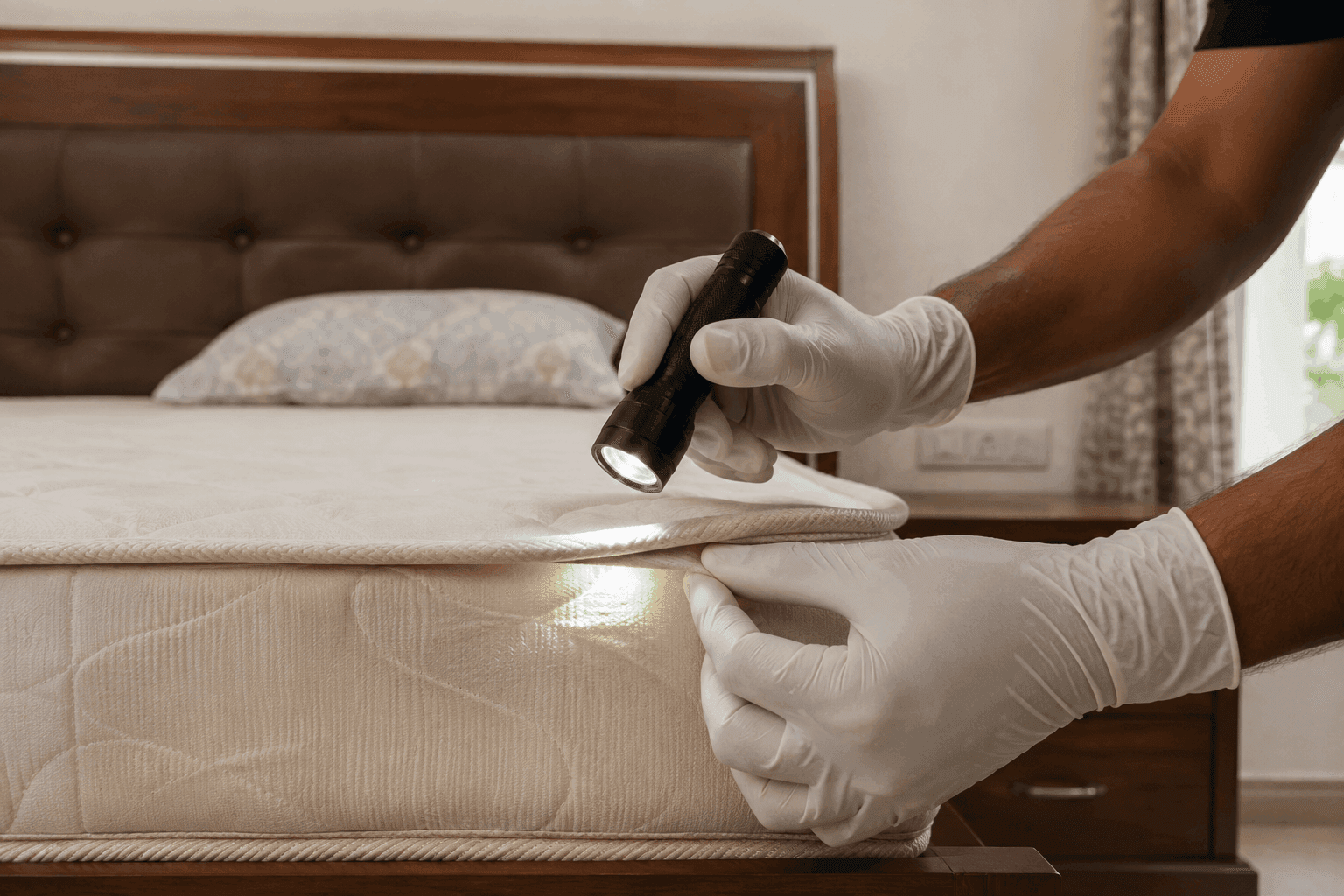 Bed Bug Control Services
Waking up with itchy red bites? Noticing blood stains or tiny insects in your bedding? You might be dealing with bed bugs-tiny pests that cause major discomfort. At SSD Pest Control Services Pvt. Ltd., we provide expert Bed Bug Control Services designed to eliminate every last bug and restore your c
Learn more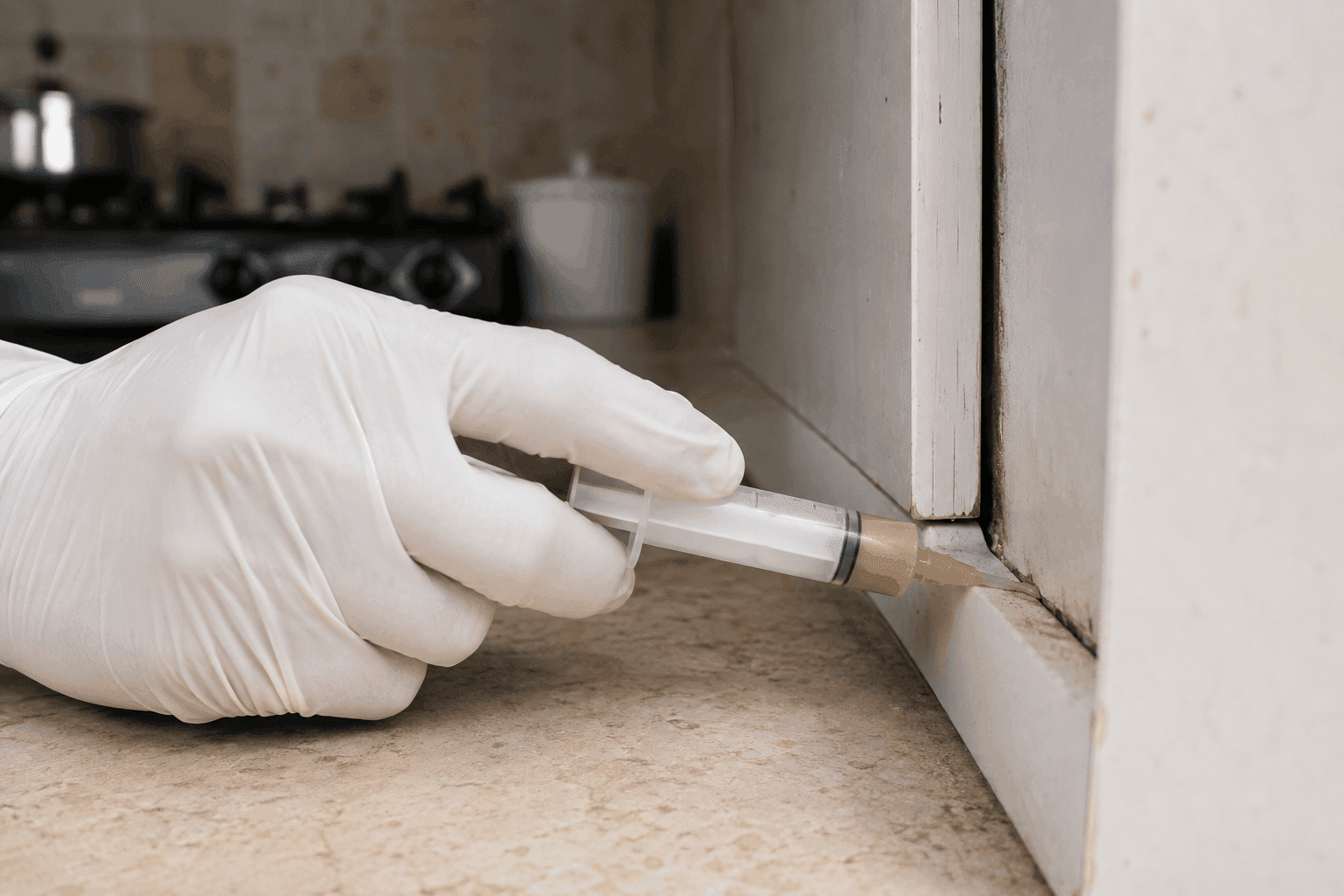 Cockroach Pest Control Services
Protect your space from disease-carrying cockroaches with Mumbai's most reliable pest control experts – SSD Pest Control Services Pvt. Ltd. We provide long-lasting, eco-friendly, and scientifically backed cockroach pest control services across Mumbai, Thane, Navi Mumbai, Nashik, Amravati, and Paratw
Learn more Fly Control Services
Flies aren't just an annoying nuisance – they're dangerous carriers of germs and diseases. At SSD Pest Control Services Pvt. Ltd., we offer specialized Fly Control Services to eliminate flies from residential, commercial, and industrial environments using safe, scientific, and highly effective techn
Learn more
Get your space protected
Free inspection, fixed quote, 100% satisfaction guarantee - across all 31 branches, 24×7.