Rodent Control Services
Rodents are not just a nuisance-they are destructive, disease-carrying pests that pose serious threats to your health, property, and reputation. At SSD Pest Control Services Pvt. Ltd., we deliver comprehensive Rodent Control Services to eliminate and prevent rat and mouse infestations in residential
- Odourless, child & pet safe
- 24×7 · 31 branches
- 100% satisfaction guarantee
Rodents are not just a nuisance-they are destructive, disease-carrying pests that pose serious threats to your health, property, and reputation. At SSD Pest Control Services Pvt. Ltd., we deliver comprehensive Rodent Control Services to eliminate and prevent rat and mouse infestations in residential, commercial, and industrial environments.
Why You Need Rodent Control Services
Rats and mice can cause extensive damage and health risks, including:
Contaminated food and surfaces
Chewed wires, pipes, and furniture
Fire hazards due to gnawed electrical cables
Diseases such as leptospirosis, hantavirus, salmonella, and plague
Triggering allergies and respiratory issues through droppings and shed fur
Signs of Rodent Infestation
Droppings in drawers, cupboards, and corners
Gnaw marks on wires, furniture, or food packaging
Scratching or squeaking noises at night
Nests made of shredded paper or fabric
Unusual pet behavior or increased pest sightings
Our 4-Step Rodent Control Process
At SSD Pest Control Services Pvt. Ltd., we follow an advanced, science-backed approach to eliminate rodents from the source:
Site Inspection
We assess your premises for signs of infestation, nesting sites, and entry points using thermal and visual inspection tools.
Customized Control Plan
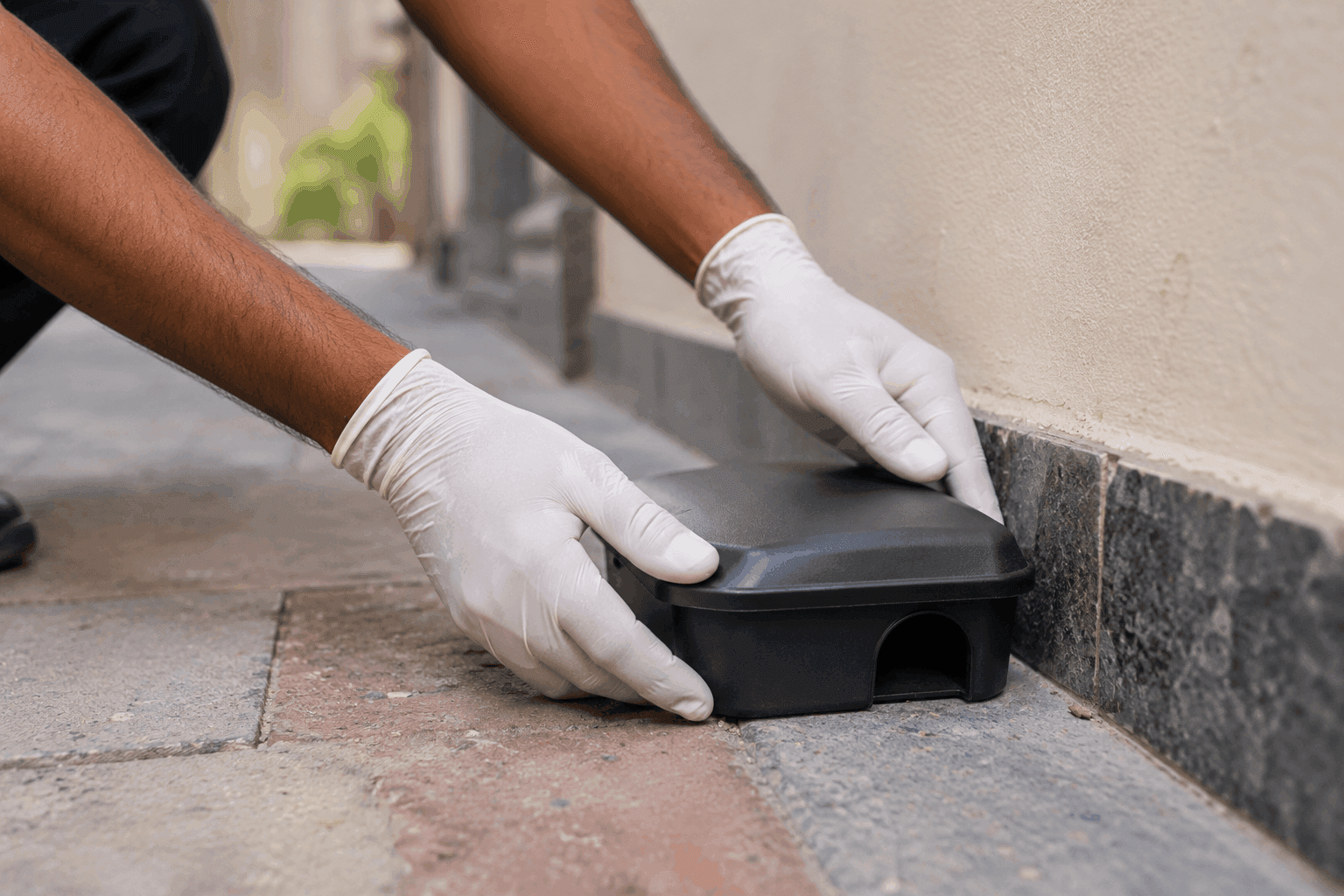
Rodent bait stations
Glue boards and mechanical traps
Burrow fumigation and trapping
Rodenticides in tamper-proof boxes
Entry Point Sealing
We seal all rodent entry points using wire mesh, sealant, and other materials to prevent re-infestation.
Monitoring & Follow-up
Regular monitoring visits ensure complete elimination and long-term protection through our AMC (Annual Maintenance Contract) packages.
Why Choose SSD Pest Control Services Pvt. Ltd.?
Over 30 years of pest control expertise
Certified technicians with safety training
Non-toxic, eco-safe solutions safe for kids and pets
100% discreet and hassle-free service
Cost-effective treatment with warranty-backed AMC options
On-call complaint resolution and free revisits during AMC
Who Can Benefit from Our Rodent Control Services?
Homes and apartments
Restaurants and food outlets
Warehouses and godowns
Hospitals and clinics
Educational institutions
Manufacturing units and factories
Corporate offices and commercial buildings
Don't Let Rodents Take Control
Ignoring rodents can cost you in health risks, property damage, and business reputation. Act early and act smart.
Rats and Mice Are Not the Same Problem
"Rodent control" covers more than one species, and the differences matter for how an infestation is treated. The Norway rat (the common brown or sewer rat) is a burrower that nests in drains, foundations, gardens, and ground-level voids, and tends to gnaw its way in from below. The roof rat, or black rat, is a climber that favours false ceilings, roof spaces, wall cavities, and upper floors of warehouses and godowns, which makes it a frequent problem in multi-storey buildings and storage facilities across Maharashtra's cities.
House mice are a different challenge altogether. They need far less food and water to survive than rats, breed faster, and can squeeze through gaps as small as 6-8 mm - roughly the width of a pencil - meaning a building can look sealed and still have active entry points a mouse can use. Mice also tend to nest close to a reliable food source, often inside kitchens, storerooms, or electrical panels, rather than travelling far each night the way rats do.
Because these species behave differently, an effective plan has to be built around the specific rodent found on site, not a generic response. Burrow treatment and drain-side baiting matter for Norway rats; roof-space and cable-duct sealing matter more for roof rats; and mice call for tighter gap sealing plus bait placement closer to food-handling and storage areas. Misidentifying the species - a common outcome of DIY attempts - is one of the most common reasons a rodent problem persists after store-bought traps or poison have already been tried.
Why DIY Traps and Poison Rarely Solve the Problem Long-Term
Rodents, particularly rats, are naturally wary of new objects placed in their environment - a behaviour known as neophobia. A trap or bait station set out for the first time is often avoided for several days, and if a rat encounters a poor-quality or wrongly placed bait and survives a partial dose, it can develop lasting bait shyness, avoiding that bait type altogether afterwards. This is one of the main reasons a few packets of rodenticide picked up from a local shop often reduce sightings temporarily but fail to end the infestation.
The second problem is breeding speed. A single female rat can produce several litters a year, each with multiple pups, and mice breed even faster. Removing the rodents that are visible at any given moment does little if the entry points, food access, and nesting sites that supported the population are still in place - the gap gets refilled within weeks. Long-term control depends on breaking the cycle at its source: closing off entry, removing food and water access, and treating nesting areas, not just reacting to the animals seen at the surface.
There is also a safety dimension DIY approaches often miss. Rodenticide placed in open trays or unsecured corners is a genuine risk to children, pets, and non-target wildlife through direct access or secondary poisoning. This is why every SSD Pest Control treatment begins with a free inspection and a written quote before any product is used, and why our WHO-approved treatments are odourless and safe to use around children and pets, without needing to vacate the property.
The Structural and Business Risk Most People Underestimate
A rodent's front incisors never stop growing, which means gnawing is not occasional behaviour - it is a biological necessity the animal repeats constantly to keep its teeth at a manageable length. Wood, plastic conduit, PVC pipes, and electrical cable insulation are all soft enough to be worn down this way. When wiring insulation is stripped inside a wall cavity or false ceiling, the exposed conductors can arc or short, and because the damage is hidden from view, it is frequently discovered only after a fault, a tripped circuit, or in the worst cases, a fire.
For commercial premises the stakes are higher still. In warehouses and godowns, rodents contaminate stored grain, packaging, and raw material with droppings, urine, and shed fur, turning saleable stock into a write-off and creating a genuine food-safety compliance problem for restaurants, food processors, and hospitality businesses. In offices, hospitals, and educational institutions, the concern shifts to server rooms, medical storage, and electrical infrastructure, where the cost of downtime from a rodent-caused fault can far exceed the cost of prevention.
None of this damage happens overnight, which is exactly why it is so often missed until it has already become expensive. A property that looks rodent-free on the surface can still have activity behind walls, above ceilings, or under flooring - which is the reason a proper inspection looks beyond visible droppings and gnaw marks to the structural cavities where the real damage tends to accumulate.
Monsoon Season and Rodent Activity Across Maharashtra
Rodent activity in Maharashtra and Gujarat follows a fairly predictable seasonal pattern tied to the monsoon. Heavy rain floods ground-level burrows, storm drains, and low-lying construction sites, pushing rats out of their usual outdoor shelters and toward the nearest dry space - which is frequently the nearest building. Waterlogging also disrupts outdoor food sources, giving rodents extra reason to move indoors in search of both shelter and food, so households and businesses that have never had a rodent issue often see their first signs of activity during or just after the monsoon.
The monsoon connection is not only about comfort and convenience for the rodents - it carries a real health dimension. Leptospirosis, one of the more serious diseases associated with rats, spreads through contact with water or damp surfaces contaminated by rat urine, and monsoon flooding is exactly the condition that increases human exposure to it, whether through wading in floodwater or contact with a waterlogged compound. This risk sits alongside the more familiar concerns of contaminated food and surfaces that come with any rodent presence.
Because of this pattern, timing matters. An inspection carried out before the monsoon sets in - checking drains, foundation gaps, and ground-floor entry points - is generally far more effective than dealing with an active infestation once rodents have already established themselves indoors for the season. SSD Pest Control operates 24x7 across its branches in Maharashtra and Gujarat, and an AMC plan is a practical way to have inspection and treatment scheduled ahead of the monsoon rather than reacted to after activity is already visible.
Related services
All 21 services →Get your space pest-free
Free inspection, fixed quote, 100% satisfaction guarantee - across all 31 branches, 24×7.