Termites Control Services
Termites cause more damage than floods, fire, and storms combined. Often called "silent destroyers," they can secretly invade your home or commercial space and cause extensive structural damage before you even notice. At SSD Pest Control Services Pvt. Ltd., we provide expert Termite Control Services
- Odourless, child & pet safe
- 24×7 · 31 branches
- 100% satisfaction guarantee
Termites cause more damage than floods, fire, and storms combined. Often called "silent destroyers," they can secretly invade your home or commercial space and cause extensive structural damage before you even notice. At SSD Pest Control Services Pvt. Ltd., we provide expert Termite Control Services that eliminate termites at the root and safeguard your property long-term.
Why Termite Control Is Essential
Termites feed on cellulose found in wood, paper, and even drywall. Left untreated, they can compromise:
- Wooden furniture and fixtures
- Flooring and wall panels
- Structural beams and doors
- Important documents and books
Signs of a Termite Infestation
Watch for these early warning signs:
- Hollow-sounding wood or furniture
- Mud tubes on walls or along baseboards
- Discarded wings near doors or windows
- Frass (termite droppings) near wooden structures
- Swollen floors or ceilings
- Cracks on wooden surfaces
Our Termite Control Service Includes
SSD Pest Control Services Pvt. Ltd. offers comprehensive termite treatment, customized for your property type and infestation level.
- 1Thorough Inspection
We begin with a detailed inspection using advanced tools to locate termite colonies, entry points, and damage areas.
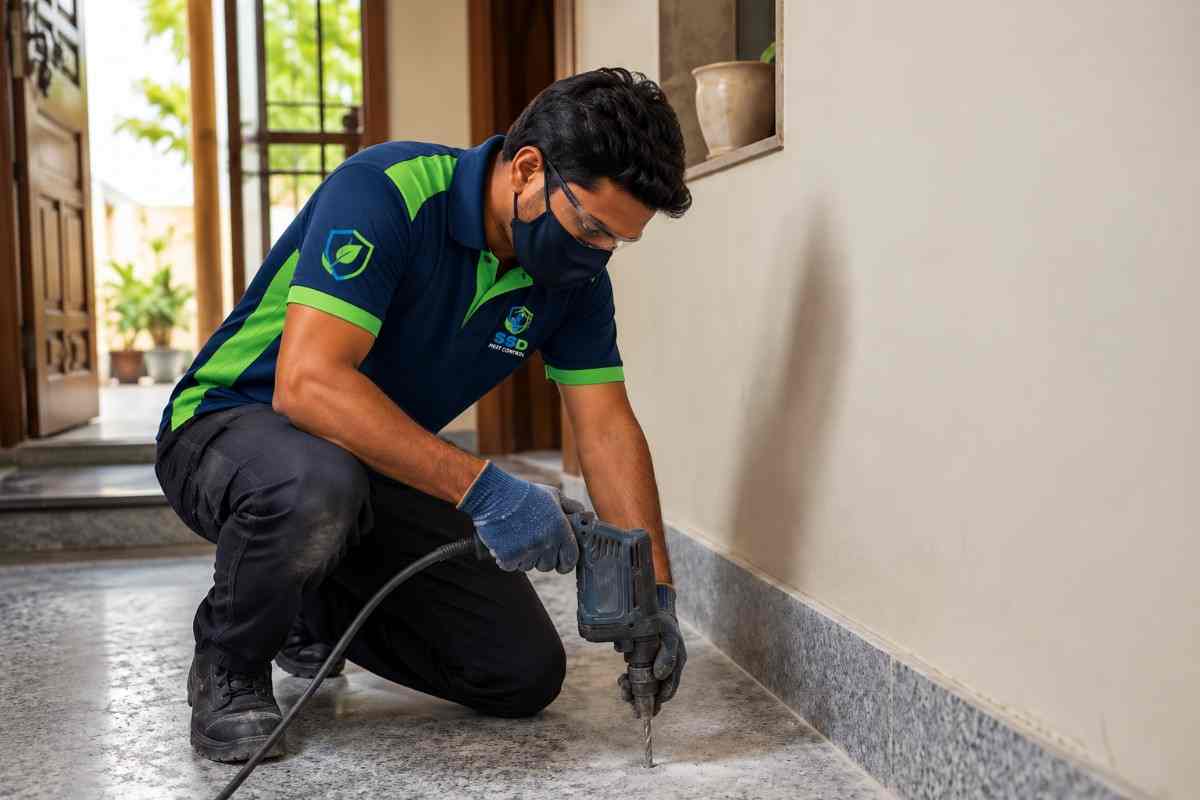
- 2Drilling & Chemical Injection (Post-Construction)
For existing buildings, we drill small holes near infested areas and inject high-quality, odorless termiticides that spread through tunnels and kill termites on contact.
- 3Trenching & Soil Treatment (Pre-Construction)
For new constructions, we apply chemicals to the soil around foundations, ensuring long-term protection before and after building completion.
- 4Wood Treatment
We spray or inject anti-termite chemicals into wooden furniture, doors, and fixtures to kill termites and prevent future infestations.
- 5Baiting Systems (Optional)
In sensitive environments, we use eco-friendly baiting systems that eliminate the entire colony without affecting non-target species.
Why Choose SSD Pest Control Services Pvt. Ltd.?
- ✅ Certified & Trained Experts - Our pest control technicians are well-trained and follow industry safety and service standards.
- ✅ Long-Lasting Protection - Our anti-termite treatments provide protection for up to 3–5 years with warranty options.
- ✅ Odorless & Non-Staining Chemicals - Safe for use in homes, offices, and sensitive environments like hospitals, schools, and kitchens.
- ✅ Customized AMC Plans Available - Choose from one-time treatment or annual maintenance contracts for worry-free protection.
- ✅ No Mess, No Hassle - Minimal disruption to your property or routine. Clean and professional service execution.
Types of Termite Treatment We Offer
- Pre-Construction Termite Treatment – A preventive solution during building stages.
- Post-Construction Termite Treatment – For existing buildings suffering from infestation.
- Wooden Furniture Termite Treatment – Specialized spray and injection techniques for wooden assets.
- Soil & Foundation Treatment – Stops termites from entering your building from underground.
Don't Wait for Termites to Take Over
Every moment you delay can result in irreversible damage. Protect your investment, your peace of mind, and your property's structure with SSD Pest Control Services Pvt. Ltd.
Schedule Your Termite Control Service Today
Get in touch with our termite specialists to book an inspection or service. Whether it's your home, office, shop, or warehouse - we have the right termite control solution for you.
The Hidden Cost of Ignoring a Termite Problem
Termites feed on cellulose, which means anything containing wood or wood pulp in your home is a potential food source — structural beams, door and window frames, false ceilings, furniture, skirting boards, even stored books and cardboard. Unlike pests that cause immediate, visible nuisance, termites work silently for months or years before the damage becomes obvious, often surfacing only when a beam gives way under pressure or a door frame crumbles at the touch.
This delay is what makes termite damage so financially punishing. By the time most homeowners notice sagging floors, hollow-sounding skirting, or doors that no longer close properly, the underlying structural timber may already be compromised beyond simple repair. Replacing load-bearing wooden elements or reinforcing damaged sections costs far more than the treatment that would have prevented the infestation in the first place.
There is also a resale angle worth considering. Buyers and property valuers often ask about termite history before closing a deal, and visible damage or a known infestation can reduce a property's market value or slow down a sale. Termite damage is also typically excluded from standard property insurance policies, which tend to treat it as a maintainable, preventable risk rather than a sudden, accidental one — leaving the repair cost with the owner.
How Maharashtra's Climate Keeps Termite Colonies Active
Termites need warmth and moisture to survive, and Maharashtra and Gujarat's climate provides both for much of the year. Subterranean termites — the species responsible for most structural damage in Indian homes — build their colonies in soil and construct mud tubes to travel to timber sources while staying protected from dry air and direct light. Humid conditions make it easier for them to maintain these tubes and extend their foraging range closer to the surface and into buildings.
The monsoon months are typically when activity intensifies. Rain saturates the soil around foundations, raises moisture levels within walls and crawl spaces, and creates ideal conditions for colonies to expand. It's also common to see termite swarmers — winged reproductive termites — emerge in large numbers just after the rains, as colonies use the humidity to establish new nests nearby. A swarm indoors is one of the clearest signs that an existing colony has matured enough to reproduce.
Because this humidity persists across much of the year in coastal and low-lying parts of the region, termite pressure here rarely disappears completely the way it might in a drier climate. Properties built without proper pre-construction soil treatment, or those with plumbing leaks and poor drainage around the foundation, stay vulnerable well beyond the monsoon season itself.
Why DIY Termite Treatments Rarely Solve the Problem
A termite colony can number in the hundreds of thousands, with the vast majority of members living underground or deep inside wall cavities where they're never seen. The worker termites that occasionally surface, or the wood damage you notice on the outside, represent only a small fraction of the colony. Store-bought sprays and powders kill the termites they directly contact, but they rarely reach the nest itself — including the queen, who can continue producing new workers indefinitely.
Worse, some surface-level repellent sprays can cause a phenomenon called 'budding,' where a disturbed colony splits into smaller, independent groups that relocate to new areas of the structure instead of dying off. What looks like a solved problem can actually spread the infestation further, making it harder and more expensive to treat later.
Effective termite control depends on creating a complete, continuous chemical barrier in the soil or timber — which requires correct drilling depth, spacing, and termiticide concentration calibrated to the extent of the infestation and the construction type. Getting this wrong leaves gaps that termites exploit to bypass the treatment entirely. It also requires correctly identifying the termite species and mapping the extent of hidden damage before any product is applied, which is difficult to do without training and inspection equipment.
Protecting Your Property After Treatment
Termite control isn't a one-time event you can forget about once the treatment is done. Chemical soil barriers gradually break down over years, construction or landscaping work can disturb treated soil, and a neighbouring property with an active colony can become a new source of reinfestation even after your own structure has been fully treated.
A few habits make a real difference in the years after treatment: keep wood-to-soil contact around the foundation to a minimum, fix plumbing leaks and improve drainage so water doesn't collect near walls or crawl spaces, clear wood debris, old furniture, or firewood stacked against exterior walls, and avoid storing cardboard or paper directly on the floor in storerooms and basements. Periodic visual checks — especially before and after the monsoon — help catch early signs like fresh mud tubes or discarded wings before they turn into a full infestation.
This is where an Annual Maintenance Contract is most useful. Rather than waiting for damage to reappear before calling for help, an AMC plan builds in scheduled follow-up inspections so any early activity is caught and treated before it re-establishes, keeping the original investment in treatment protected over the long term.
Termites or Wood Borers? Getting the Diagnosis Right
Termite damage is often confused with damage from wood-boring beetles (powder post beetles) or carpenter ants, but the treatments for each are different, and applying the wrong one wastes both time and money. Termites tend to hollow out wood from the inside while leaving a thin outer layer intact, and their activity is usually accompanied by mud tubes running along walls, foundations, or wooden supports, since subterranean termites need that moist, enclosed pathway to survive.
Wood-boring beetles, by contrast, leave small round exit holes on the wood surface and fine, powder-like frass (borer dust) beneath or around the damaged timber, with no mud tubes involved. Carpenter ants don't eat wood at all — they tunnel through it to nest, leaving smooth galleries and coarse wood shavings rather than the soil-lined tunnels termites create. Furniture and structural timber can also show old, inactive damage from a past infestation that has nothing to do with current activity, which can lead to unnecessary treatment if not assessed properly.
Because the right response depends entirely on correctly identifying what's actually causing the damage, an on-site inspection by someone trained to recognise these differences matters more than the treatment product itself. This is also why a written quote should always follow a proper inspection rather than precede it — the scope of work should reflect the actual pest and the actual extent of damage, not a generic estimate.
Related services
All 21 services →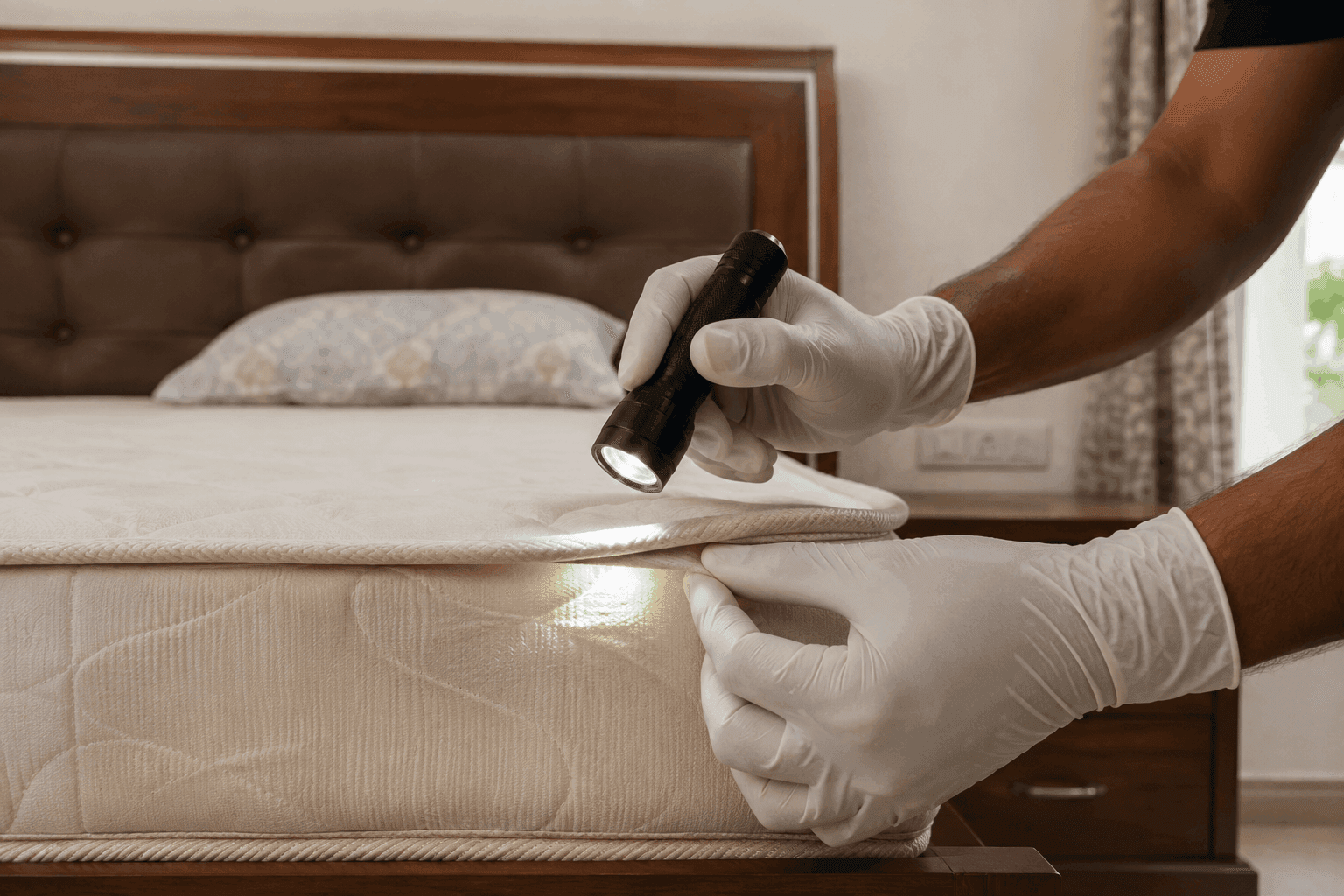 Bed Bug Control Services
Waking up with itchy red bites? Noticing blood stains or tiny insects in your bedding? You might be dealing with bed bugs-tiny pests that cause major discomfort. At SSD Pest Control Services Pvt. Ltd., we provide expert Bed Bug Control Services designed to eliminate every last bug and restore your c
Learn more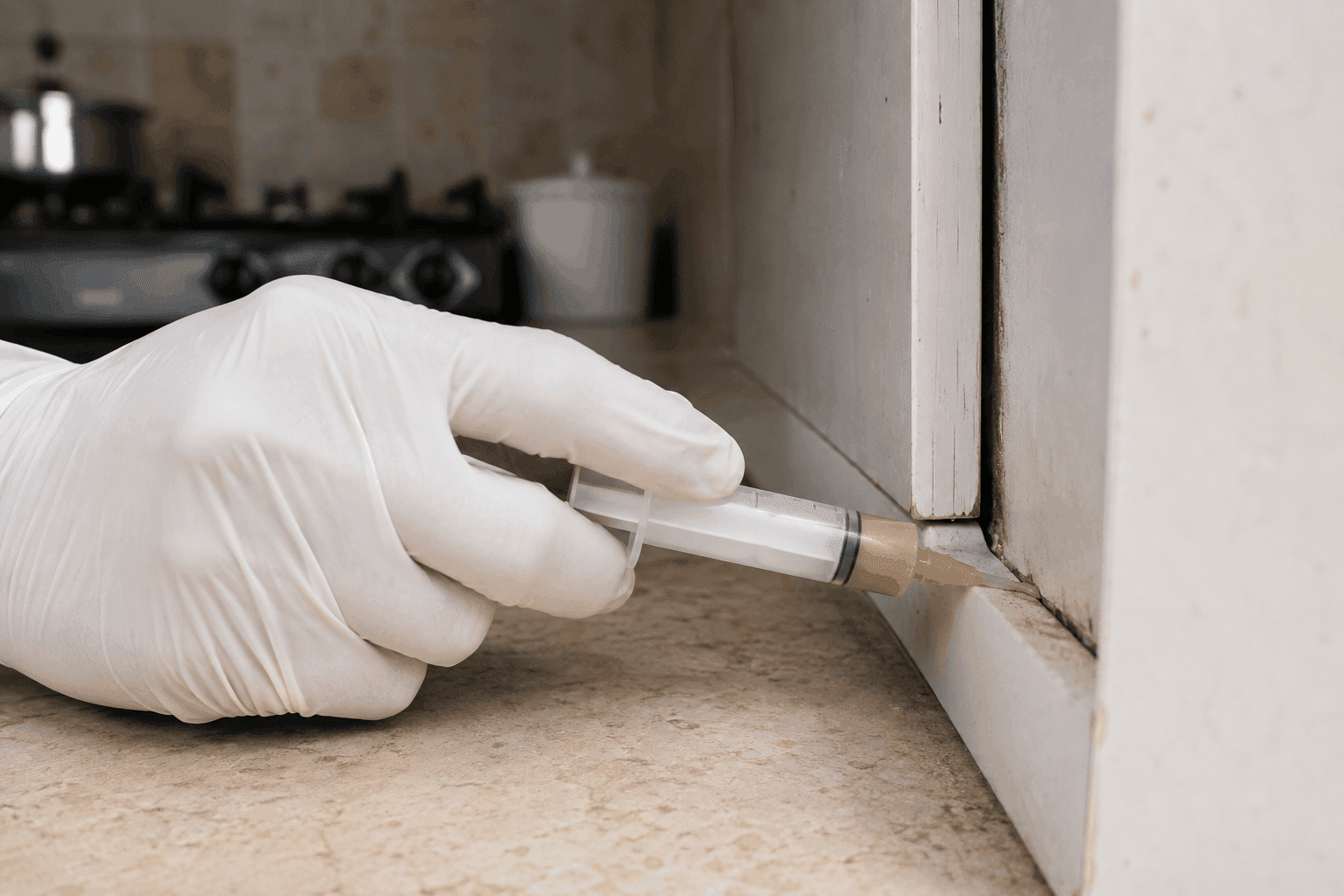 Cockroach Pest Control Services
Protect your space from disease-carrying cockroaches with Mumbai's most reliable pest control experts – SSD Pest Control Services Pvt. Ltd. We provide long-lasting, eco-friendly, and scientifically backed cockroach pest control services across Mumbai, Thane, Navi Mumbai, Nashik, Amravati, and Paratw
Learn more Fly Control Services
Flies aren't just an annoying nuisance – they're dangerous carriers of germs and diseases. At SSD Pest Control Services Pvt. Ltd., we offer specialized Fly Control Services to eliminate flies from residential, commercial, and industrial environments using safe, scientific, and highly effective techn
Learn more
Get your space pest-free
Free inspection, fixed quote, 100% satisfaction guarantee - across all 31 branches, 24×7.