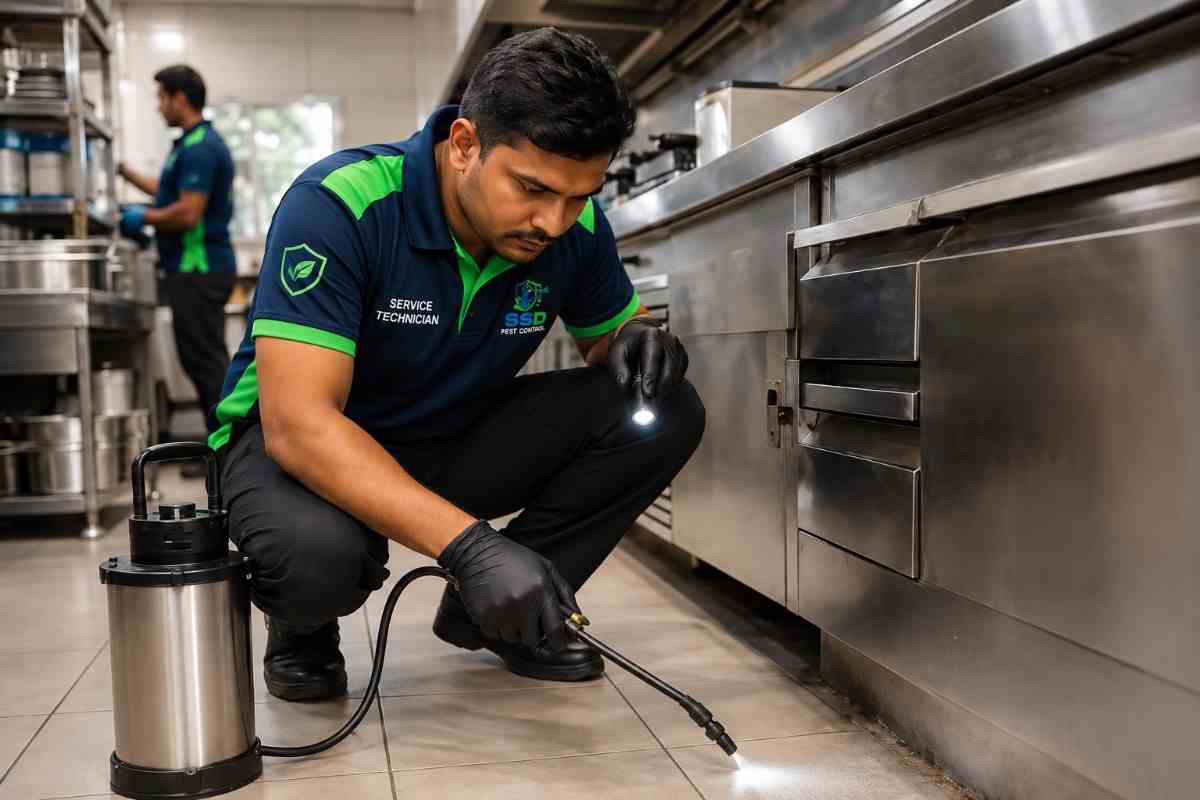
Pest Control for Restaurants
A single pest sighting in the dining area, or a failed FSSAI inspection, can shut a restaurant down or wreck its reviews overnight. Scheduled pest control built around kitchen compliance and service hours - not a one-time spray.
- Odourless, child & pet safe
- 24×7 · 31 branches
- 100% satisfaction guarantee
A restaurant's pest risk is concentrated in two places that matter more than almost anything else in the business: the kitchen, where food safety compliance depends on it, and the dining area, where a single guest sighting can end up in a review before the table is even cleared.
That combination - constant food handling plus a dining room full of guests - means restaurant pest control has to be thorough in the kitchen and completely invisible in the dining area, on a schedule that doesn't get in the way of service.
Why Restaurants Need Specialised Pest Control
Food is stored, prepped, cooked and plated on the same premises every single day, which makes a restaurant kitchen one of the highest-risk environments for pests of any business type. At the same time, the dining area is guest-facing for most of the day - there's no back-office to hide behind.
That combination of constant food handling and constant guest presence is what separates a restaurant from a typical office or retail space, and it is why generic pest control does not fit well here.
Common Pests in Restaurants
The pests that put a restaurant at the most risk - operationally and reputationally:
- Cockroaches - drawn to kitchens, grease traps, and any warm, food-rich environment
- Rodents - storage rooms, kitchens, and areas near waste disposal
- Flies and fruit flies - breeding in drains, bins, and around fresh produce
- Stored-product pests - weevils and grain moths in rice, flour, and dry-store ingredients
FSSAI Compliance and Kitchen Areas
An FSSAI food licence depends on demonstrable pest control practice - it is one of the first things a hygiene audit checks. Treatment in kitchen, storage and prep areas is planned to support that compliance, with records you can actually produce during an inspection.
Treating Around Service Hours
Unlike a hotel, a restaurant does close - which means the most disruptive part of a treatment can happen after closing or before opening, rather than around live guests. Kitchen and dining-area work is scheduled to hours that don't interrupt service.
Protecting Your Reviews and Reputation
A pest seen in the dining area rarely stays a private problem - it tends to end up in a review within the hour. Regular, scheduled visits are aimed at catching pest activity before a guest ever does, not reacting after the fact.
Why Choose Professional Restaurant Pest Control
A restaurant cannot treat pest control as an occasional call-out - not with a food licence and a dining room both riding on it. It needs a plan built around kitchen compliance, service hours, and the reality that one bad sighting can cost far more than the treatment itself.
How Pests Actually Enter a Commercial Kitchen
Most restaurant infestations don't start inside the dining room or even the kitchen itself — they start at the boundary between the building and the outside world. Delivery bays, cardboard packaging, produce crates, drain lines connecting to the municipal sewer network, and gaps around exhaust ducting and utility conduits are the most common entry routes. A single cardboard box from a supplier can carry cockroach egg cases (oothecae) that survive normal handling and hatch days later, well after the delivery has been signed off and shelved.
Understanding these entry points matters because it changes where control effort should be concentrated. Spraying visible surfaces inside a kitchen does little if the real access route is a poorly sealed expansion joint behind a walk-in fridge, or a floor drain with a dry trap that lets sewer gas and roaches move freely between floors. Restaurants that repeatedly see the same pest come back within weeks, despite treatment, are almost always dealing with an unaddressed entry point rather than a treatment failure.
A proper assessment maps these routes room by room — receiving area, dry storage, kitchen line, dish pit, and the perimeter of the building — rather than treating the space as one undifferentiated zone. This is also why a one-time spray rarely holds up in a live commercial kitchen: new deliveries, staff turnover in cleaning routines, and constant equipment movement reopen the same pathways on an ongoing basis. It's a large part of the reasoning behind AMC-based recurring visits, which are structured to check these reopened pathways again at each scheduled visit rather than relying on a single intervention to hold indefinitely.
Equipment, Voids and the Spaces You Can't See
Commercial kitchen equipment creates an unusual amount of hidden harbourage that a typical inspection can miss. The motor compartments under refrigeration units, the insulated cavities behind pizza ovens and griddles, the space beneath fryers where oil residue accumulates, and the voids inside hollow equipment legs and wall panelling all stay warm, humid, and largely undisturbed — ideal conditions for cockroaches and, in older buildings, for rodents seeking a nesting site close to a food and water source.
These voids are also where grease and food residue collect out of sight of daily cleaning. Even a kitchen with a spotless visible surface can be running an active infestation a few centimetres behind the equipment line, because routine mopping and wipe-downs simply never reach that space. This is one of the clearest reasons DIY pest control struggles in a food-service setting: consumer sprays and traps are built to be placed on open surfaces, not injected into equipment voids or behind fixed panelling.
Effective treatment in this environment typically means working with, not against, the kitchen's equipment layout — treating known voids, motor housings, and utility penetrations directly, and coordinating with kitchen staff on when equipment can be safely pulled out for access. Because this level of access isn't something a restaurant can reasonably do on its own on a regular basis, it's another area where a scheduled maintenance visit has more opportunities to catch a developing problem than a single annual clean-out.
Storage and Receiving Discipline
Dry storage and receiving areas deserve treatment as a distinct zone rather than an extension of the kitchen, because the risks there are different in kind. Bulk flour, grain, spices, and packaged dry goods are vulnerable to stored-product pests — weevils, flour beetles, and moths — that arrive already present in a sack or box rather than migrating in from outside. These pests can go unnoticed for weeks because they live inside the product itself, and the first visible sign is often webbing in a grain bin or adult beetles in a spice container that has already been opened for service.
Rotation practice compounds or reduces this risk. A strict first-in-first-out system limits how long any single batch sits in storage, which limits how far a stored-product infestation can develop before it's used or discarded. Storage that keeps dry goods off the floor, away from walls, and in sealed containers rather than original paper or thin plastic packaging also removes both a food source and an access route for crawling pests working their way along the base of shelving.
Because these pests originate in the supply chain rather than the building, inspection at receiving is the point of highest leverage — checking packaging integrity, looking for insect activity in bulk sacks before they're accepted into storage, and flagging suppliers whose deliveries repeatedly show signs of contamination. A pest control programme that only inspects the kitchen and dining areas, and skips the storeroom and receiving dock, is missing where a meaningful share of infestations actually begin.
Humidity, Drainage and Monsoon Conditions
Commercial kitchens run wetter than almost any other indoor environment — steam from cooking, constant washing, and floor drains that are rarely fully dry create conditions that suit cockroaches and drain flies particularly well. In Maharashtra and Gujarat, this baseline humidity rises further during the monsoon months, when ambient moisture and warmer, wetter conditions outside increase pest activity generally and make it easier for pests to survive and move between a building's interior and exterior.
Floor drains and grease traps deserve specific attention in this context. A drain with a dry P-trap — common when a floor drain isn't used often enough to keep water in the trap — stops functioning as the barrier it's designed to be, allowing cockroaches and sewer-associated pests a direct route up into the kitchen. Grease traps that aren't cleaned on schedule become a food source in their own right, sustaining drain fly larvae and adding to the same odour and pest pressure that food-safety inspectors and customers alike will notice.
None of this is a sign of poor housekeeping on its own — it's a structural reality of how commercial kitchens are built and used, and it means drainage and moisture control should sit alongside surface cleaning as a core part of a kitchen's pest prevention routine, not an afterthought handled only when a problem is already visible.
What to Expect After a Treatment Visit
A single treatment rarely resolves an established infestation in one visit, and it helps for kitchen management to know what a realistic timeline looks like. Cockroach populations, in particular, are often controlled through baiting and growth-regulator approaches that work over one to three weeks as the population cycles through — a technician may see fewer live insects and more control-related activity in the days immediately after treatment before numbers drop off meaningfully. This is expected, not a sign that the treatment hasn't worked.
Between and after visits, a few habits meaningfully extend the effect of professional treatment. Keeping bait stations and monitoring points undisturbed during routine cleaning, avoiding the use of unrelated household sprays near treated areas (which can repel pests away from bait rather than eliminating them), and reporting any sightings promptly rather than waiting for the next scheduled visit all help keep a kitchen on top of activity between service dates.
Because a food-service environment changes constantly — new stock arriving, staff rotating through cleaning duties, seasonal shifts in humidity — ongoing monitoring rather than a one-off intervention is what actually keeps a kitchen clear over time. This is the reasoning behind an AMC arrangement: regular scheduled visits catch a recurrence at the monitoring stage, before it becomes a visible problem during service, and every visit still opens with the same inspection-first approach used on the initial job.
Related services
All 22 services → 60-Minute Express Pest Control (Mumbai to Thane)
Pest emergency and can't wait days for an appointment? Along the Dahisar-to-Andheri (Mumbai) and Thane corridor, our team aims to reach you within 60 minutes of your call - for pest control (residential, commercial and restaurants) and Rat Guard installation.
Learn more Commercial Pest Control Services
- Protect Brand Reputation: Visible pests can drive away customers and clients. - Ensure Hygiene & Safety: Pests carry bacteria and diseases that endanger staff and customers. - Prevent Property Damage: Termites, rodents, and insects can destroy infrastructure, inventory, and electronics. - Stay Leg
Learn more- Pest Control for Hotels
Hotels carry a different kind of pest risk than any other business - one guest complaint about a bed bug or a cockroach in the lobby can cost far more than the treatment itself. Scheduled, discreet pest control built around occupancy and guest experience, not just the pests.
Learn more
Get your space pest-free
Free inspection, fixed quote, 100% satisfaction guarantee - across all 31 branches, 24×7.