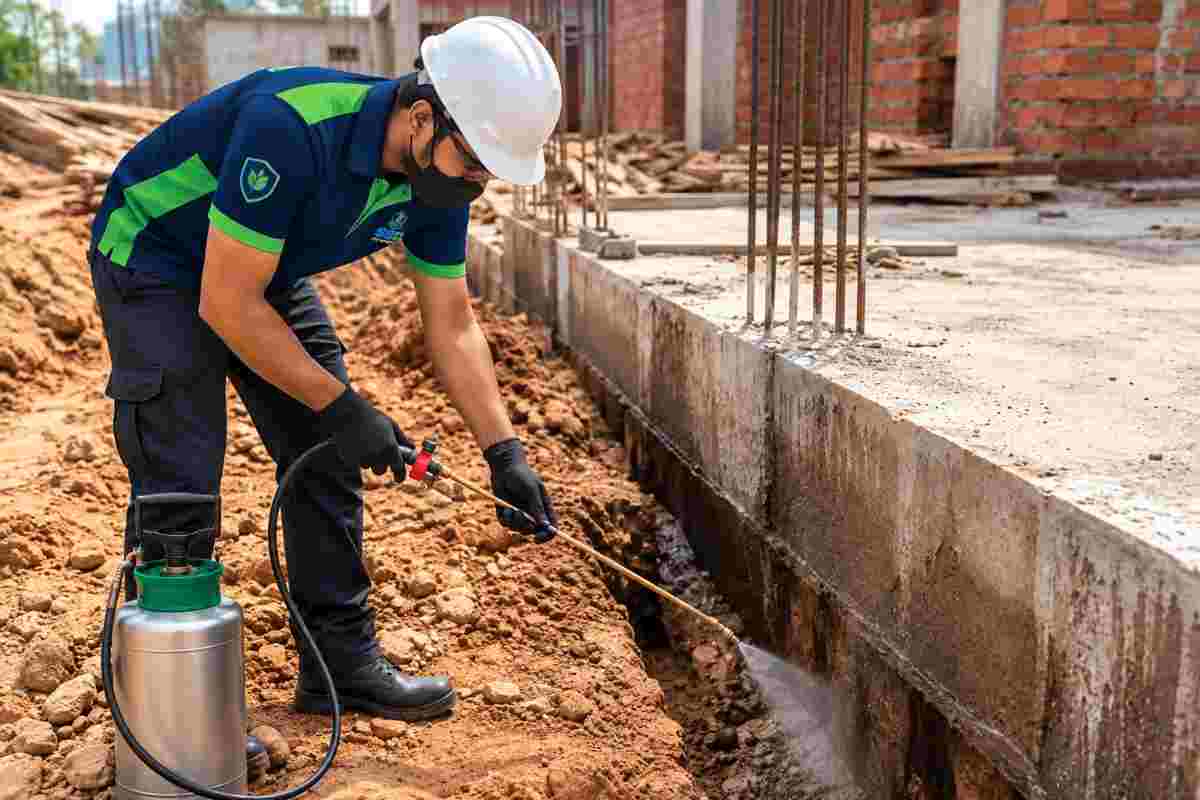
Pre-Construction Anti-Termite Treatment Services
Protecting your property before construction begins is one of the most cost-effective and preventive pest control strategies. Once termites invade, they can: Weaken the foundation and wooden structures Compromise building safety and aesthetics Lead to expensive repair costs in the future Spread rap
- Odourless, child & pet safe
- 24×7 · 31 branches
- 100% satisfaction guarantee
Protecting your property before construction begins is one of the most cost-effective and preventive pest control strategies. Once termites invade, they can:
Weaken the foundation and wooden structures
Compromise building safety and aesthetics
Lead to expensive repair costs in the future
Spread rapidly without early signs
Our pre-construction treatment creates a chemical barrier in the soil, preventing termites from attacking the structure from below.
Our 5-Stage Pre-Construction Anti-Termite Process
SSD Pest Control Services Pvt. Ltd. follows ISI-approved procedures for maximum protection:
- 1Site Inspection
We assess the entire construction area including soil type, moisture levels, and layout to customize the treatment plan.
- 2Soil Treatment
Before the foundation work begins, we apply anti-termite chemicals to the excavated soil to create a protective chemical barrier.
- 3Trench and Foundation Treatment
We treat the bottom and sides of foundation trenches and pits with powerful termiticides to prevent termite entry.
- 4Backfill Soil Treatment
Once the foundation is laid, we treat the soil used to refill the trench. This provides a continuous barrier around the structure.
- 5Floor Slab and Junction Treatment
Before laying the flooring slab, we treat the entire sub-floor area and junctions of walls with concrete for long-term termite resistance.
Features of Our Pre-Construction Anti-Termite Services
ISI-Approved Chemicals (Chlorpyrifos or Imidacloprid-based)
Odorless, Non-Staining Formulas
100% Safe for Humans and Pets Post-Application
Adherence to Indian Standard IS 6313 (Part II)
Effective Protection for 5–10 Years
Certification Provided for Project Compliance
Suitable for Residential, Commercial & Industrial Projects
Why Choose SSD Pest Control Services Pvt. Ltd.?
- Over 30 Years of Expertise in Termite Management
- Trained Technicians & Advanced Equipment
- Custom Plans for Builders, Developers & Individual Plots
- Competitive Pricing with Service Warranty
- Timely Execution According to Construction Schedule
- Long-Term AMC Options Available for Post-Construction Support
Applicable for:
Individual Plot Owners
Real Estate Developers & Builders
Commercial Complexes
Government Infrastructure Projects
Educational Institutions & Hospitals
Factory & Warehouse Developments
Build with Confidence. Build Termite-Free.
Don't let termites compromise your property investment. Trust SSD Pest Control Services Pvt. Ltd. to deliver superior Pre-Construction Anti-Termite Treatment Services that meet the highest standards of protection and reliability.
- Contact us today to schedule a site visit or get a quote tailored to your project requirements.
How Subterranean Termites Attack a Building From the Ground Up
The termites responsible for structural damage in Indian buildings are almost always subterranean species that live in colonies in the soil, not in the timber itself. A mature colony can hold anywhere from a few hundred thousand to over a million individuals, built around a queen that can go on laying eggs for well over a decade. Worker termites forage constantly, day and night, moving outward from the central nest in search of cellulose, wood, paper, cardboard, and even the paper backing on drywall or insulation. Because they are photophobic and moisture-dependent, they rarely travel across open, exposed surfaces; instead they build narrow mud tubes out of soil, saliva, and faecal matter to create sheltered, humid tunnels between the ground and their food source.
This is precisely why a building's foundation and sub-floor are the point of greatest vulnerability. Termites need only the smallest gap, a hairline crack in a footing, a construction joint, a service duct, a gap around a plumbing penetration, to establish a foraging route from the surrounding soil into the structure above. Once inside a wall cavity or under a slab, they operate almost entirely out of sight, which is what makes subterranean termites so much more destructive than the drywood or dampwood varieties that a homeowner might spot directly.
By the time visible evidence appears, a mud tube running up a plinth wall, discarded wings near a light fixture after the first monsoon rain, or a door frame that sounds hollow when tapped, the colony has typically been active for months, sometimes years. This is the core logic behind treating the soil and foundation before construction even begins: it denies the colony a viable route into the building in the first place, rather than trying to detect and interrupt an established infestation after the fact.
Why Pre-Construction Treatment Costs Less Than Fixing an Infestation Later
Treating a building for termites before the slab is poured and treating one after it is occupied are fundamentally different undertakings. During construction, the soil, trenches, and foundation base are fully exposed, which allows a continuous chemical barrier to be created directly against the earth and masonry with no obstruction from flooring, furniture, wiring, or finished walls. Post-construction treatment, by contrast, usually means drilling through finished floors and walls at regular intervals to inject chemicals into the soil beneath, a process that is more invasive, more time-consuming, and inherently harder to make continuous because pipes, expansion joints, and structural elements interrupt the drilling pattern.
The financial case follows the same logic. A gap in a soil barrier applied after construction is far more likely to occur, and each gap is a potential re-entry point that may require repeat visits and repeat treatment over the life of the building. An active infestation compounds this further: termite damage to structural timber, door and window frames, false ceilings, wooden flooring, and built-in furniture is a repair cost layered on top of the pest treatment cost itself, and in more advanced cases it can affect the structural assessment of the property at resale.
Pre-construction treatment avoids this sequence altogether by removing the opportunity for a colony to establish contact with the building. It is a prevention measure rather than a remediation measure, and prevention applied once, correctly, at the foundation stage is consistently less disruptive and less costly than repeated remediation applied to a finished, occupied structure.
Maharashtra and Gujarat's Climate: A Breeding Ground for Termite Activity
Termite colonies thrive in warm, humid conditions with consistent soil moisture, and much of Maharashtra and Gujarat offers exactly that for large parts of the year. Soil temperatures in the region regularly sit within the range termites favour for foraging and colony growth, and the long, intense monsoon season saturates the ground for weeks at a time, ideal conditions for subterranean colonies to expand their foraging galleries closer to the surface and toward nearby structures. It is also common to see winged reproductive termites, or alates, swarm in large numbers right after the first heavy rains, as colonies use the moist conditions to disperse and found new nests.
Soil composition adds to this picture. Clay-heavy and black cotton soils, common across parts of both states, retain moisture for longer after rainfall than sandier soils do, which keeps the ground hospitable to termite activity even between spells of rain. For a construction site, this means the period between excavation and the pouring of the foundation, when soil is freshly disturbed and exposed, is a particularly sensitive window, since disturbed soil close to a moisture source is an easy environment for a nearby colony to move into.
This climate reality is a major reason pre-construction treatment is treated as standard practice rather than an optional add-on in this part of the country. A structure built without a soil barrier in this environment is not facing a hypothetical risk; it is being built in conditions that are already favourable to termite colonies establishing themselves nearby.
Protecting Your Termite Barrier After Handover
A properly applied pre-construction soil barrier is durable, but it is not indestructible, and its long-term effectiveness depends partly on what happens around the building after handover. Excavation for landscaping, new drainage lines, a deck, or a boundary wall close to the foundation can cut through the treated soil zone and create a fresh gap for termites to exploit. Where possible, any digging near the plinth in the years after construction should be treated as a point to have re-checked rather than assumed to be safe.
Moisture management matters just as much as the chemical barrier itself. Termites are drawn to damp conditions, so keeping garden beds, mulch, and irrigation lines from sitting directly against exterior walls, and making sure roof drainage and downspouts direct water away from the foundation, reduces the moisture gradient that draws colonies toward a structure in the first place. Wood-to-soil contact, a door frame, fence post, or stored timber touching bare earth, should also be avoided, since it gives termites a direct route to cellulose that bypasses the treated barrier entirely.
Periodic reinspection is the other half of long-term protection, since even a well-installed barrier can be compromised by ground movement, plumbing work, or years of weathering that go unnoticed until damage appears. This is the purpose of an Annual Maintenance Contract: rather than waiting for visible signs like mud tubes on the plinth or swarmers after monsoon rains, scheduled inspections catch a compromised barrier or early activity while it is still a straightforward fix rather than a structural repair.
Related services
All 21 services →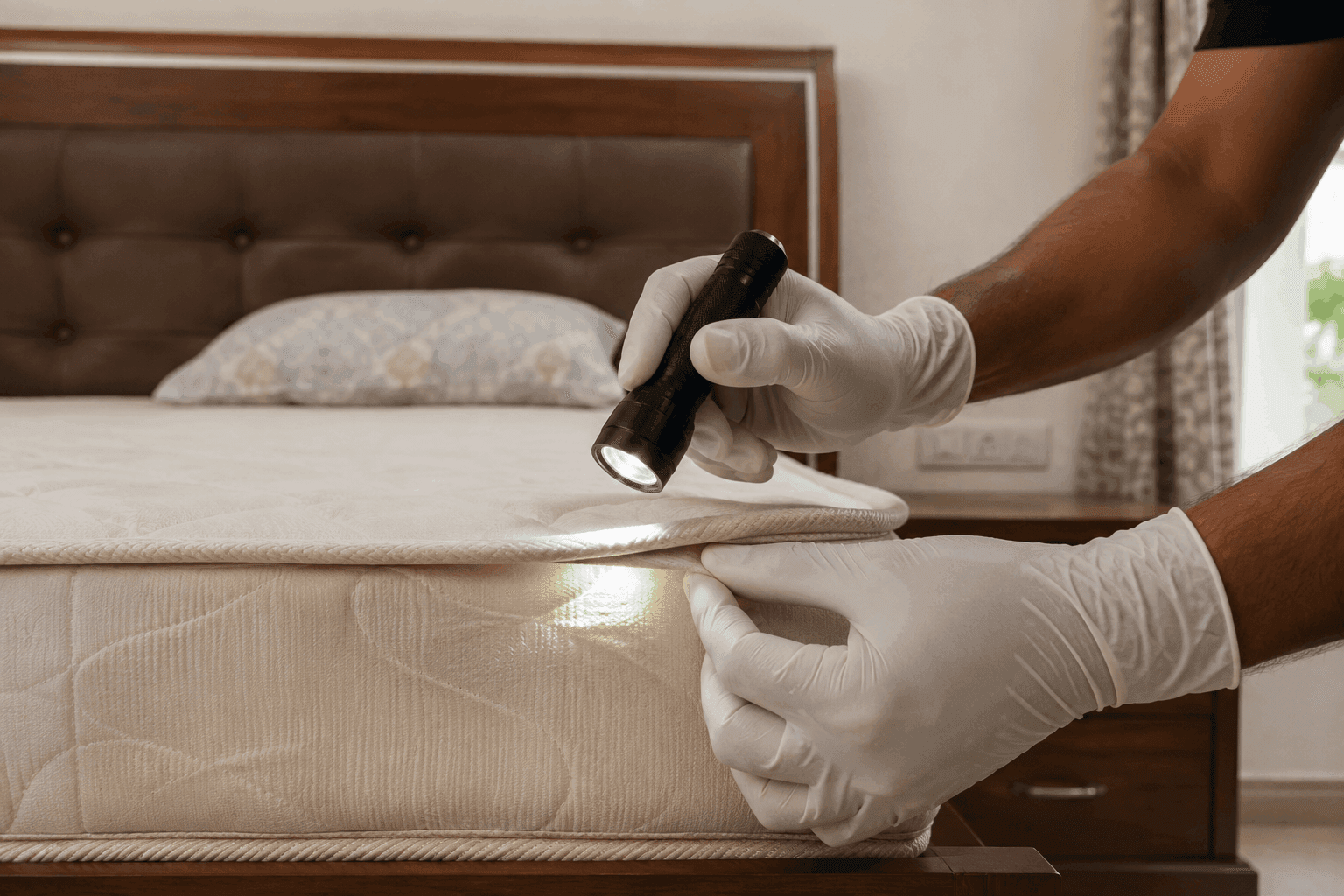 Bed Bug Control Services
Waking up with itchy red bites? Noticing blood stains or tiny insects in your bedding? You might be dealing with bed bugs-tiny pests that cause major discomfort. At SSD Pest Control Services Pvt. Ltd., we provide expert Bed Bug Control Services designed to eliminate every last bug and restore your c
Learn more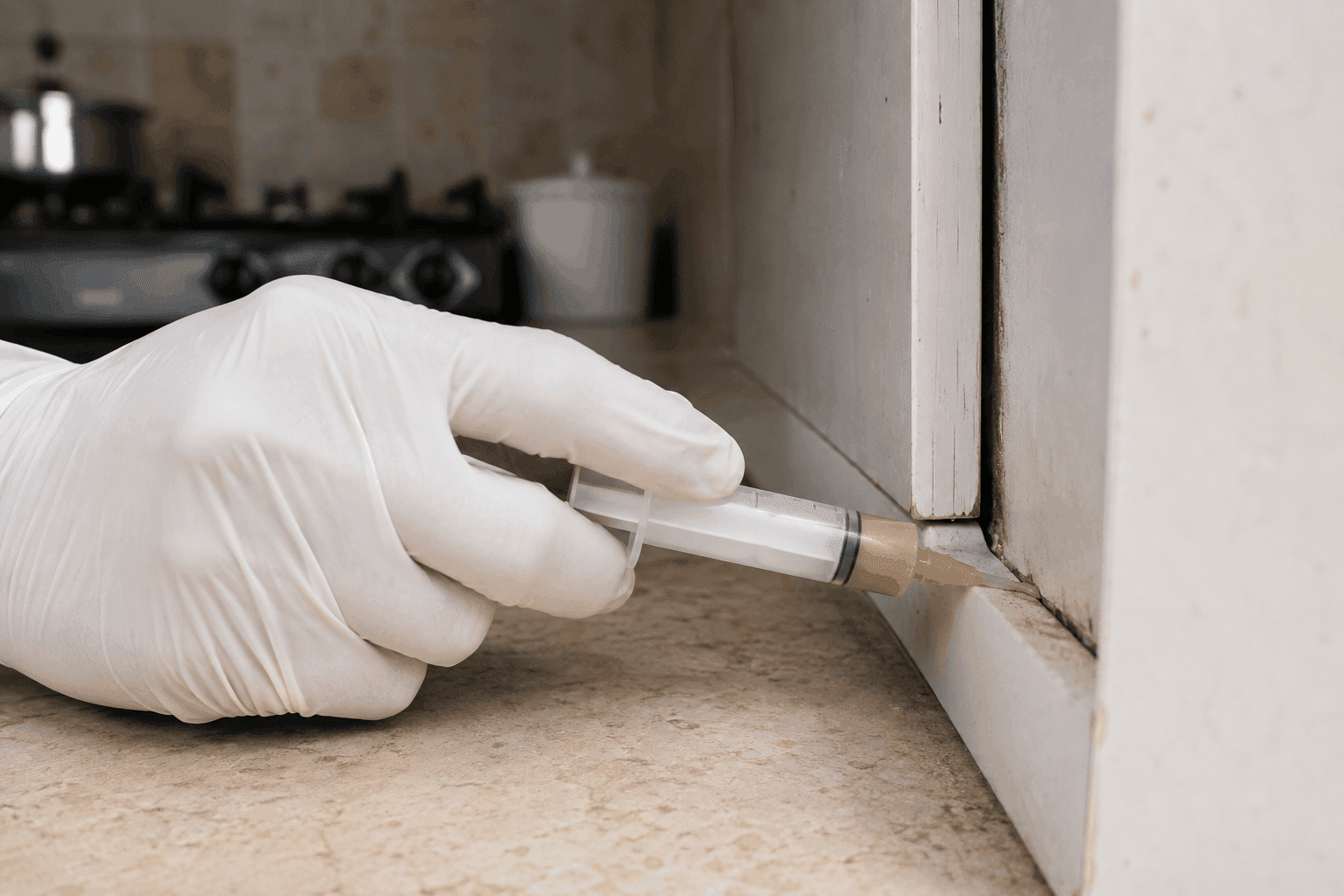 Cockroach Pest Control Services
Protect your space from disease-carrying cockroaches with Mumbai's most reliable pest control experts – SSD Pest Control Services Pvt. Ltd. We provide long-lasting, eco-friendly, and scientifically backed cockroach pest control services across Mumbai, Thane, Navi Mumbai, Nashik, Amravati, and Paratw
Learn more Fly Control Services
Flies aren't just an annoying nuisance – they're dangerous carriers of germs and diseases. At SSD Pest Control Services Pvt. Ltd., we offer specialized Fly Control Services to eliminate flies from residential, commercial, and industrial environments using safe, scientific, and highly effective techn
Learn more
Get your space protected
Free inspection, fixed quote, 100% satisfaction guarantee - across all 31 branches, 24×7.