
Residential Pest Control Services
Pests don't just cause discomfort-they can seriously impact your health and property: - Disease Transmission: Cockroaches, rodents, and mosquitoes carry bacteria and viruses. - Allergic Reactions: Bed bugs, dust mites, and insect droppings can trigger asthma and skin issues. - Structural Damage: Te
- Odourless, child & pet safe
- 24×7 · 31 branches
- 100% satisfaction guarantee
Pests don't just cause discomfort-they can seriously impact your health and property:
- Disease Transmission: Cockroaches, rodents, and mosquitoes carry bacteria and viruses.
- Allergic Reactions: Bed bugs, dust mites, and insect droppings can trigger asthma and skin issues.
- Structural Damage: Termites and wood borers can silently damage wooden furniture and structures.
- Food Contamination: Ants and rodents often invade kitchens and food storage.
Early intervention ensures a healthier, pest-free living environment.
Our Residential Pest Control Process
At SSD Pest Control Services Pvt. Ltd., we follow a systematic and scientific approach:
- 1Site Inspection
Our technicians begin by inspecting your home-both interiors and exteriors-to identify pests, entry points, and breeding areas.
- 2Customized Treatment Plan
We develop a tailored plan depending on the infestation type, level, and layout of your home.
- 3Safe Application
We use eco-friendly, odorless, and child-safe chemicals that are effective yet gentle on your living environment.
- 4Follow-Up & Prevention Tips
We provide after-service guidelines and maintenance tips to prevent reinfestation.
Types of Pests We Treat in Homes
- Cockroaches
- Ants
- Bed Bugs
- Mosquitoes
- Rodents (Mice & Rats)
- Termites
- Spiders
- Lizards & Flies
What Makes SSD the Right Choice for Your Home?
- 30+ Years of Industry Experience
- Certified & Trained Pest Experts
- Odorless & Safe Chemicals
- Same-Day Service Available
- No Need to Empty Kitchen or Move Furniture
- Affordable AMC Packages for Year-Round Protection
- Free Follow-Up Service on Select Plans
Flexible Residential Plans to Suit Your Needs
- One-Time Pest Control Service – Perfect for sudden infestations
- Quarterly or Bi-Annual AMC – Peace of mind for the whole year
- Specialized Bed Bug, Termite, or Rodent Packages
- Custom Plans for Villas, Apartments, and Bungalows
Your Family's Health & Comfort Is Our Priority
When pests invade your home, you need a quick and reliable solution. At SSD Pest Control Services Pvt. Ltd., we combine expertise, advanced methods, and a customer-first approach to keep your home safe and hygienic.
- Contact us today to schedule your Residential Pest Control Service and enjoy a pest-free home with guaranteed results.
Why Homes Across Maharashtra and Gujarat Face Year-Round Pest Pressure
Pest activity in this region is not a once-a-year problem that can be treated and forgotten. The monsoon months bring sustained humidity that termites, cockroaches, and mosquitoes all depend on to breed; waterlogged drains, damp basements, and moisture trapped in wall cavities create exactly the conditions these pests need to multiply quickly. As soon as the rains recede, the heat and residual dampness that follow keep ants and stored-product pests active in kitchens and pantries, while stagnant water left behind in gutters, planters, and terraces continues to serve as a mosquito breeding ground well into the drier months.
Dense urban housing adds another layer to the problem. In apartment buildings and closely packed residential lanes common across cities in Maharashtra and Gujarat, pests rarely respect unit boundaries; a cockroach or rodent problem in one flat, a shared drainage line, or a neglected basement can seed activity in neighbouring homes through common walls, risers, and ducting. Older constructions with ageing plumbing and hairline foundation cracks are particularly exposed, since these small gaps are often all a termite colony or a rodent needs to gain entry.
Because these conditions repeat every year rather than occurring as isolated events, a single treatment addresses only the immediate problem, not the recurring risk. This is precisely why ongoing coverage, rather than a one-time visit, matters for homes in this climate, and it is the reasoning behind offering AMC plans that keep a property monitored and protected as conditions shift across seasons.
Early Warning Signs Homeowners Often Miss
Most pest infestations are well established by the time they become visibly obvious, simply because the pests responsible for them are built to stay hidden. Cockroaches and rodents are largely nocturnal, termites operate inside wall voids and wooden framing where they are never exposed to light, and bed bugs retreat into mattress seams and furniture joints during the day. This means the earliest evidence of a problem is rarely the pest itself; it is the trail it leaves behind.
Termites typically announce themselves through discarded, translucent wings near windowsills and doors after a swarm, thin mud tubes running along walls or foundations, or wood that sounds hollow or feels soft when tapped. Cockroach activity often shows up first as a persistent musty odour or small, dark egg cases tucked into cracks near kitchen appliances and under sinks. Rodents leave gnaw marks on wiring, cables, and packaging, along with greasy smudge trails along the base of walls where they travel repeatedly. Bed bugs are usually noticed through small rust-coloured stains on bedding or unexplained bite marks that appear in clusters after sleep.
None of these signs on their own confirms the scale of a problem, but they are reliable enough that acting on the first one is almost always cheaper and simpler than waiting for a full-blown infestation to become undeniable. A colony that is caught while still small is far easier to eliminate completely than one that has had months to establish multiple breeding sites through a property.
The Health and Structural Risks of Letting an Infestation Sit
Pests inside a home are more than a nuisance; many carry genuine health risks. Cockroach droppings, shed skin, and saliva are well-documented triggers for asthma and allergic reactions, especially in children. Rodents can carry pathogens responsible for leptospirosis and salmonella, both of which spread through contact with droppings or contaminated food and surfaces. Mosquitoes remain one of the most consequential pests in Indian households given their role in transmitting dengue, malaria, and chikungunya, all of which see seasonal spikes tied to standing water around homes. Bed bugs, while not linked to disease transmission, cause persistent skin irritation and disrupted sleep, which takes a real toll over time.
The financial risk is just as real, even if it is less immediately visible. Termites feed continuously on wooden beams, door and window frames, furniture, and even paper and fabric, and the damage is structural rather than cosmetic; by the time sagging floors or crumbling wood is obvious, repair costs are often substantial. Rodents gnaw through electrical wiring and insulation, which is not just a maintenance issue but a genuine fire hazard in older wiring systems.
Weighed against these risks, the cost of early professional intervention is almost always the smaller number. Prevention and early treatment are inexpensive relative to structural repairs, medical costs, or the disruption of a full-scale infestation that has spread through multiple rooms or shared walls.
Why Store-Bought Sprays and DIY Traps Rarely Solve the Problem
It is understandable that most people reach for a spray or a trap the moment they spot a pest; it is the fastest available response. The problem is that these products are designed to kill on contact, not to address the colony or nest that the visible pest came from. A cockroach sprayed in the kitchen is one of potentially hundreds living behind appliances or inside wall gaps; a few dead ants on a countertop rarely reflect the size of the colony feeding a food source nearby. DIY treatments deal with symptoms, not sources.
Repeated, inconsistent use of over-the-counter chemicals can also work against the homeowner. Pests that survive a diluted or improperly applied treatment do not just disappear; colonies can develop reduced sensitivity to commonly available active ingredients over time, and surviving insects often relocate deeper into the structure rather than being eliminated, making the next round of treatment harder, not easier.
Effective pest control depends on understanding a species specific biology: where it nests, how it feeds, its breeding cycle, and the conditions that sustain it. Termite treatment, for instance, requires identifying and treating the colony access points into the structure, not just the visible mud tubes. Professional treatment is built around this kind of targeted, species-specific approach, starting with identifying exactly what is present and where it is coming from, rather than treating every pest problem the same way.
Maintaining a Pest-Free Home Between Treatments
The period after a treatment is when small habits make the biggest difference to how long results last. Moisture control is the single most effective thing a homeowner can do; fixing dripping taps, sealing leaking pipes, and ensuring bathrooms and kitchens dry out fully rather than staying damp removes the exact conditions cockroaches, termites, and silverfish rely on. Storing dry food, grains, and pet food in sealed, airtight containers rather than open bags removes an easy food source that can otherwise undo a treatment within weeks.
Outside the home, small maintenance habits matter just as much. Keeping vegetation trimmed back from exterior walls removes a natural bridge that ants and termites use to reach a structure, while clearing stagnant water from planters, terraces, and gutters after rain cuts off mosquito breeding before it starts. Sealing new cracks in flooring or foundations as they appear, rather than waiting for a larger repair, closes off entry points before pests find them.
Because pest pressure changes with the seasons, ongoing monitoring catches new activity while it is still minor rather than after it has re-established. This is the practical value of an AMC; scheduled visits mean small issues are addressed as they appear, instead of a household only becoming aware of a problem once it is visible again.
Need it fast? We can be there in 60 minutes.
For pest control - residential, commercial and restaurants - and Rat Guard installation, our teams covering Dahisar to Andheri (Mumbai) and Thane aim to reach you within 60 minutes of your call. Every other branch still gets same-day service and a free inspection.
Full details on the express serviceRelated services
All 21 services → 60-Minute Express Pest Control (Mumbai to Thane)
Pest emergency and can't wait days for an appointment? Along the Dahisar-to-Andheri (Mumbai) and Thane corridor, our team aims to reach you within 60 minutes of your call - for pest control (residential, commercial and restaurants) and Rat Guard installation.
Learn more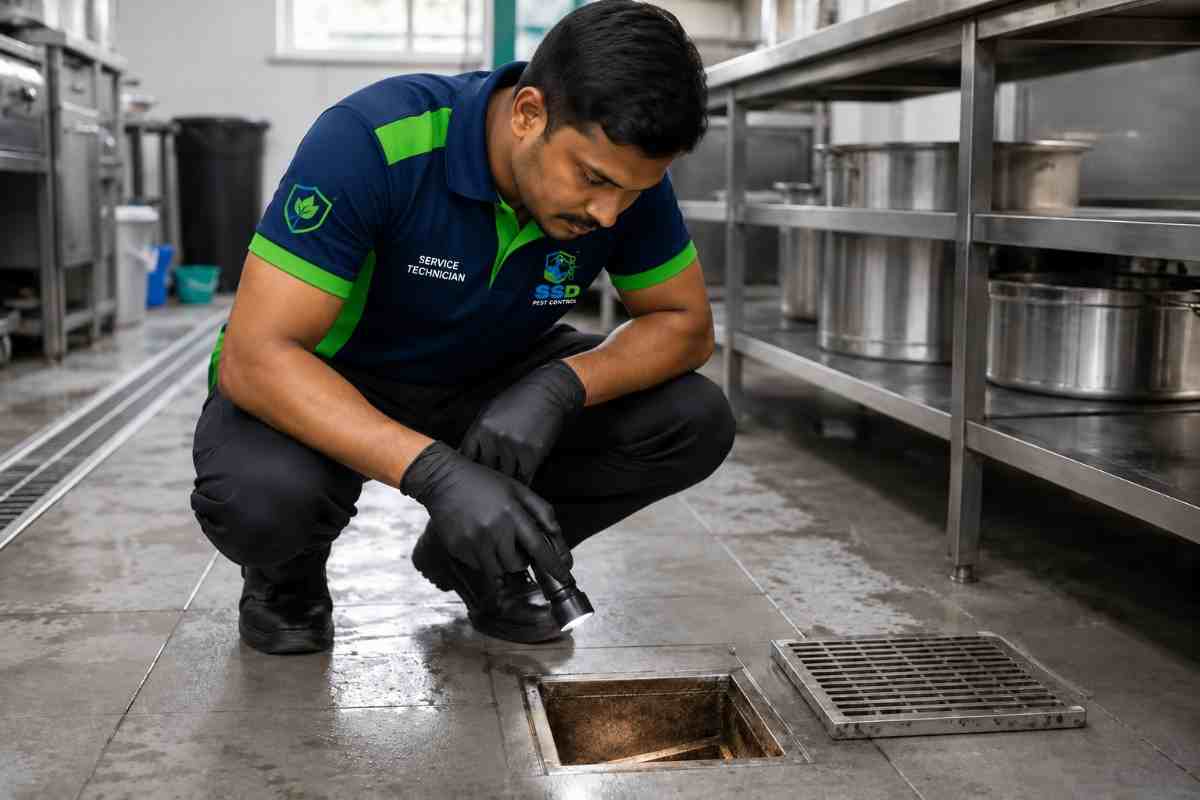 Commercial Pest Control Services
- Protect Brand Reputation: Visible pests can drive away customers and clients. - Ensure Hygiene & Safety: Pests carry bacteria and diseases that endanger staff and customers. - Prevent Property Damage: Termites, rodents, and insects can destroy infrastructure, inventory, and electronics. - Stay Leg
Learn more- Pest Control for Hotels
Hotels carry a different kind of pest risk than any other business - one guest complaint about a bed bug or a cockroach in the lobby can cost far more than the treatment itself. Scheduled, discreet pest control built around occupancy and guest experience, not just the pests.
Learn more
Get your space pest-free
Free inspection, fixed quote, 100% satisfaction guarantee - across all 31 branches, 24×7.