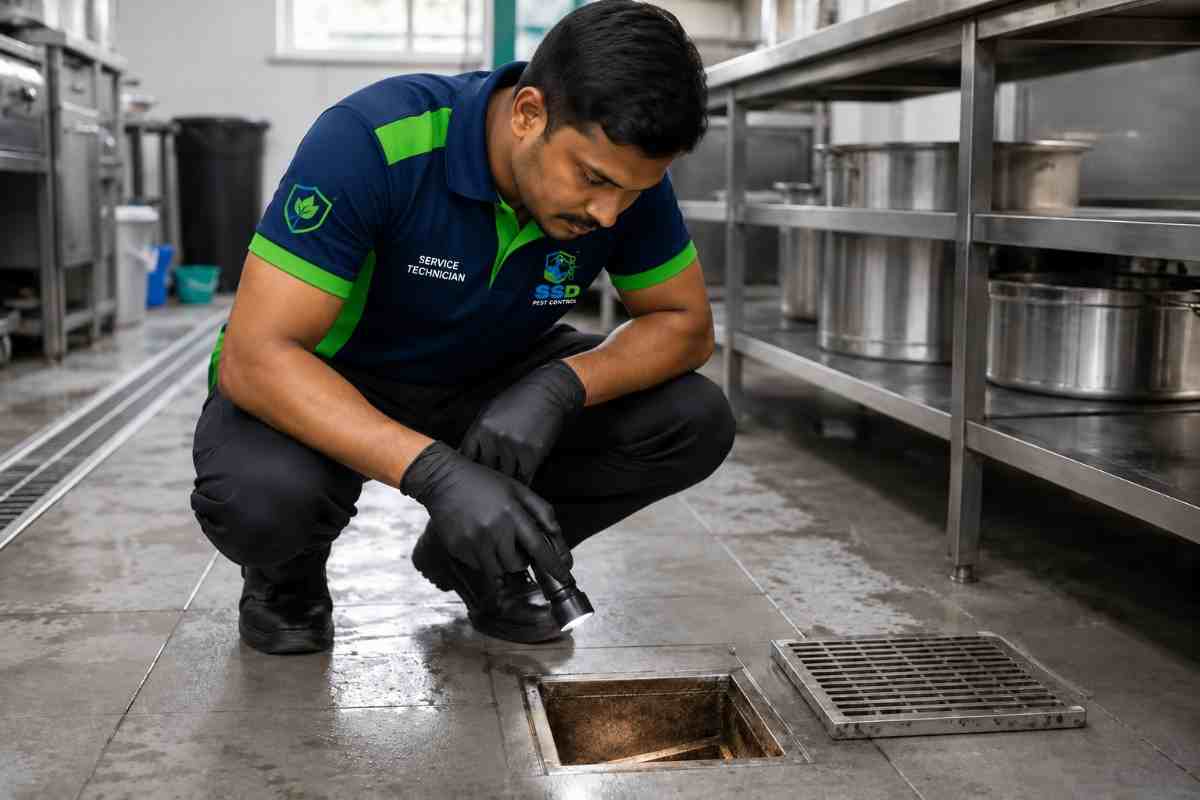
Commercial Pest Control Services
- Protect Brand Reputation: Visible pests can drive away customers and clients. - Ensure Hygiene & Safety: Pests carry bacteria and diseases that endanger staff and customers. - Prevent Property Damage: Termites, rodents, and insects can destroy infrastructure, inventory, and electronics. - Stay Leg
- Odourless, child & pet safe
- 24×7 · 31 branches
- 100% satisfaction guarantee
- Protect Brand Reputation: Visible pests can drive away customers and clients.
- Ensure Hygiene & Safety: Pests carry bacteria and diseases that endanger staff and customers.
- Prevent Property Damage: Termites, rodents, and insects can destroy infrastructure, inventory, and electronics.
- Stay Legally Compliant: Many industries are required by law to maintain pest-free premises.
- 1Inspection & Risk Assessment
Our trained experts conduct a full site evaluation to detect infestations, high-risk zones, and entry points.
- 2Industry-Specific Treatment Plan
We customize treatment based on your business type and operations-whether you're a food business, an office, or a storage facility.
- 3Safe, Non-Disruptive Application
We use odorless, non-toxic, and WHO-approved chemicals to ensure minimal disruption to your work environment.
- 4Documentation & Compliance
Detailed reports and treatment logs are provided for audit, HACCP, FSSAI, or ISO compliance.
Industries We Serve
- Corporate Offices
- Restaurants & Cafés
- Hotels & Resorts
- Schools & Educational Institutions
- Hospitals & Clinics
- Retail Stores & Malls
- Warehouses & Storage Units
- Factories & Industrial Plants
- Pharmaceuticals & Food Processing Units
Why Choose SSD Pest Control for Your Business?
- 30+ Years of Professional Experience
- Certified & Trained Pest Technicians
- Scheduled Services to Avoid Downtime
- Annual Maintenance Contracts (AMC)
- Safe for Employees, Clients & Products
- Emergency & After-Hours Service Available
- Pest Control Reports for Compliance
Types of Pests We Eliminate
- Cockroaches & Ants
- Rodents (Mice & Rats)
- Termites & Wood Borers
- Bed Bugs
- Mosquitoes & Flies
- Spiders & Lizards
- Bird Nesting & Pigeon Problems
Flexible AMC Plans for Commercial Clients
Our Annual Maintenance Contracts include periodic inspections, scheduled treatments, emergency response, and compliance documentation-perfect for long-term protection and budget control.
Protect Your Business from Pest Threats – Act Now
Don't let pests compromise your operations. Trust SSD Pest Control Services Pvt. Ltd. to provide prompt, reliable, and discreet commercial pest management that keeps your facility clean, safe, and compliant.
- Contact us today for a free inspection and custom quote for your Commercial Pest Control needs.
The Hidden Cost of an Unchecked Infestation
Pest problems rarely stay small in a commercial setting. Rodents gnaw through electrical wiring and insulation, raising the risk of short circuits and fire in server rooms, kitchens, and storage areas. Termites work silently inside wall cavities, wooden fixtures, and structural beams for months before any visible damage appears, by which point repair costs can run far higher than early intervention would have. Stored-product pests can render entire batches of raw material, packaging, or finished goods unsellable, turning a pest issue into a direct hit on inventory value.
The indirect costs are often steeper than the physical damage. A single pest sighting by a customer, auditor, or delivery partner can trigger a negative review, a failed hygiene audit, or a suspended vendor contract — outcomes that take far longer to recover from than the infestation itself. In regulated sectors such as food service, hospitality, healthcare, and pharmaceuticals, a documented pest issue can mean license suspension, blacklisting by corporate clients, or breach of lease and franchise agreements that explicitly require pest-free premises.
There is also a compounding effect that business owners frequently underestimate. A small colony left untreated for a few weeks can multiply into an infestation requiring weeks of remediation, temporary closures, or discarding of contaminated stock. The cost curve of pest management is not linear — it rises sharply the longer a problem is allowed to establish itself, which is why early detection and scheduled professional treatment are almost always cheaper than reactive, emergency intervention.
Warning Signs Every Facility Manager Should Watch For
Most commercial infestations give off early signals long before an outbreak becomes visible to customers or staff. Rodent activity typically shows up first as droppings along walls and behind equipment, gnaw marks on packaging or cabling, greasy rub marks where rodents repeatedly travel the same path, and faint scratching sounds within false ceilings or wall voids overnight. Cockroach infestations often announce themselves through a persistent musty odor, dark fecal specks near sinks and drains, and egg cases (oothecae) tucked into cracks behind kitchen equipment — activity that is usually nocturnal and easy to miss during daytime operating hours.
Termite presence is harder to spot because the damage happens inside timber and masonry rather than on the surface. Mud tubes running along foundations or walls, wood that sounds hollow when tapped, and discarded wings collected near windows or light fixtures after the first rains are the clearest indicators of an active colony. In hospitality settings, small rust-colored stains on linen, tiny dark spots along mattress seams, and unexplained bite marks reported by guests point toward bed bugs, a pest that spreads quickly between rooms if not contained early.
The common thread across all of these is that staff conducting a routine walk-through are not trained to recognize them as a pattern — a few droppings get swept away, a hollow-sounding beam gets ignored, a musty smell gets attributed to the weather. Building a habit of reporting anything unusual immediately, rather than waiting for a visible sighting, is one of the simplest ways a business can catch a developing problem before it becomes a full infestation.
Seasonal Pest Pressure Across Maharashtra and Gujarat
Commercial properties across these regions face a fairly predictable pest calendar shaped by climate. The monsoon months bring a sharp rise in humidity that favors cockroach breeding and mosquito activity, while waterlogging around drains and low-lying premises pushes rodents out of flooded burrows and into buildings in search of dry shelter. The onset of the first rains also triggers termite swarming season, when winged reproductive termites (alates) emerge in large numbers to establish new colonies — a period when previously undetected colonies often reveal themselves for the first time.
The pre-monsoon and summer months carry a different set of pressures. Rising temperatures drive ants and flies toward any accessible food and water source, making kitchens, waste storage areas, and loading docks especially vulnerable. Exposed or poorly managed waste breaks down faster in the heat, accelerating fly breeding cycles. As temperatures drop in winter, rodents increasingly move indoors seeking warmth, often nesting in storage rooms, false ceilings, and equipment voids within commercial kitchens and warehouses.
The coastal stretches of Maharashtra and Gujarat add another layer of risk for wood and masonry structures, since consistently damp conditions in those areas make timber more susceptible to termite and fungal activity year-round rather than in a single season. Festival periods such as Diwali and Ganesh Chaturthi also bring higher food volumes and footfall for sweet shops, caterers, and event venues, which can translate into a temporary rise in pest activity if waste and food storage aren't managed closely during that stretch. Recognizing these patterns allows a business to plan preventive treatment ahead of the season rather than reacting once activity is already visible.
Why Off-the-Shelf Pest Control Doesn't Work at Commercial Scale
Consumer sprays and store-bought traps are designed for the scale and layout of a home, not a warehouse, restaurant kitchen, or multi-floor office. Commercial facilities have far more potential harborage — false ceilings, service ducts, loading docks, bulk storage racks, and equipment voids — that a generic surface spray simply cannot reach. Treating only the pests that are visible leaves the nest or colony intact, so the population rebounds within weeks, often stronger and more resistant to the same active ingredient.
Repeated, inconsistent use of over-the-counter chemicals is also a known driver of pesticide resistance in local pest populations, making future treatment progressively harder. In a commercial setting the stakes of getting the chemical, dosage, and application method wrong are higher too — a product applied near a food-prep surface, a patient area, or an HVAC intake can create contamination or allergy risks for staff and customers that go well beyond the pest problem itself.
Commercial environments also operate under constraints that a DIY approach isn't built to handle: treatment often has to happen during specific hours to avoid disrupting business, certain chemicals or methods are unsuitable near food handling or medical areas, and many regulatory audits and lease agreements require treatment records from a licensed, documented process rather than an ad-hoc application. Professional pest management is built around these constraints from the start, which is a large part of why it consistently outperforms generic, one-time fixes.
Sustaining Results Between Scheduled Treatments
Professional treatment removes an existing pest problem, but keeping a commercial property pest-free is an ongoing discipline that involves the facility itself, not just the pest control provider. Waste management is usually the single biggest factor — keeping bins covered and on a regular collection schedule, cleaning grease traps and floor drains routinely, and avoiding overnight accumulation of food waste in kitchens or break rooms removes the food source that draws pests back in.
Structural upkeep matters just as much. Sealing gaps around pipes, cables, and utility entry points, fitting door sweeps on external and loading-dock doors, and repairing damaged window screens closes off the physical access points pests use to get inside. In storage areas, keeping stock off the floor, rotating inventory on a first-in-first-out basis, and using sealed containers instead of open bags or boxes reduces the chances of stored-product pests establishing themselves in raw materials or packaging.
Staff awareness is often the most overlooked piece. Employees are on the premises far more consistently than any pest control visit, so a short habit of reporting droppings, unusual odors, or damaged packaging as soon as they're noticed can catch a developing issue weeks before the next scheduled service. Exterior maintenance — trimming vegetation away from the building, clearing standing water, and keeping outdoor waste storage away from entrances — rounds out the picture. None of this replaces professional treatment, but it significantly extends how long its results last, which is exactly what an AMC schedule is designed to work alongside.
Need it fast? We can be there in 60 minutes.
For pest control - residential, commercial and restaurants - and Rat Guard installation, our teams covering Dahisar to Andheri (Mumbai) and Thane aim to reach you within 60 minutes of your call. Every other branch still gets same-day service and a free inspection.
Full details on the express serviceRelated services
All 21 services →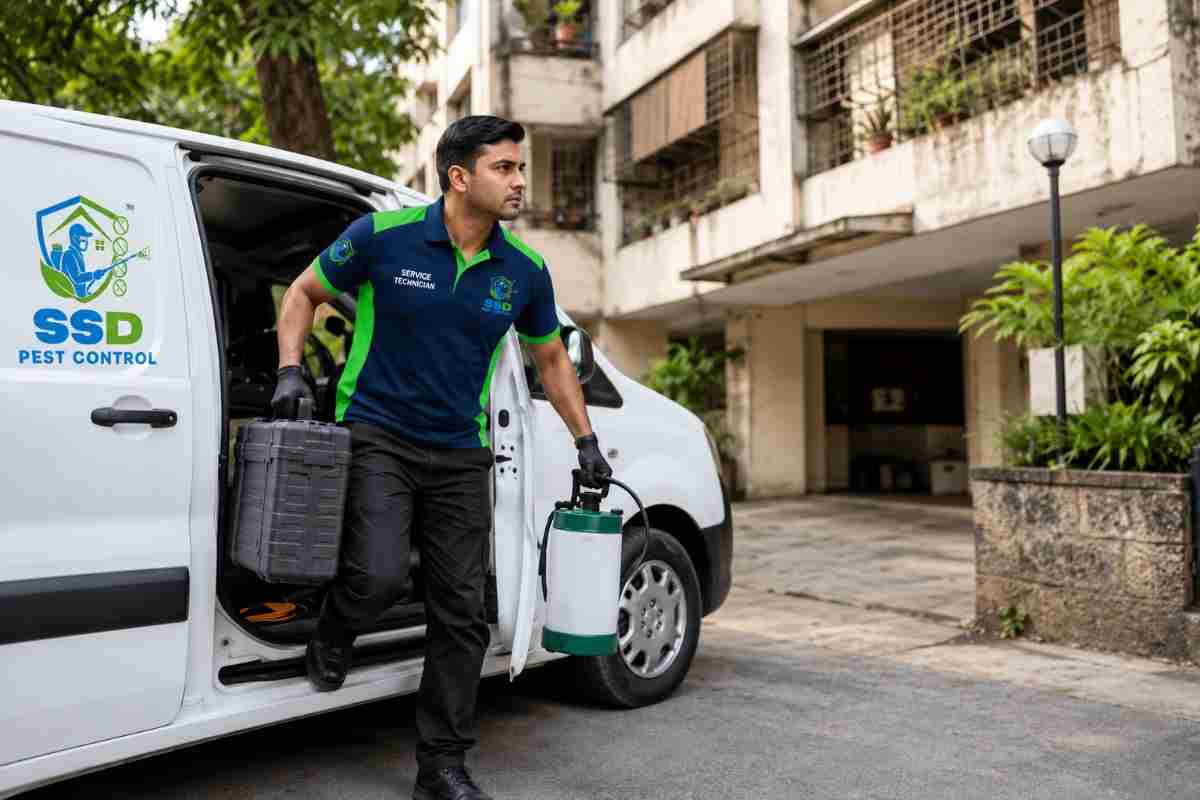 60-Minute Express Pest Control (Mumbai to Thane)
Pest emergency and can't wait days for an appointment? Along the Dahisar-to-Andheri (Mumbai) and Thane corridor, our team aims to reach you within 60 minutes of your call - for pest control (residential, commercial and restaurants) and Rat Guard installation.
Learn more- Pest Control for Hotels
Hotels carry a different kind of pest risk than any other business - one guest complaint about a bed bug or a cockroach in the lobby can cost far more than the treatment itself. Scheduled, discreet pest control built around occupancy and guest experience, not just the pests.
Learn more 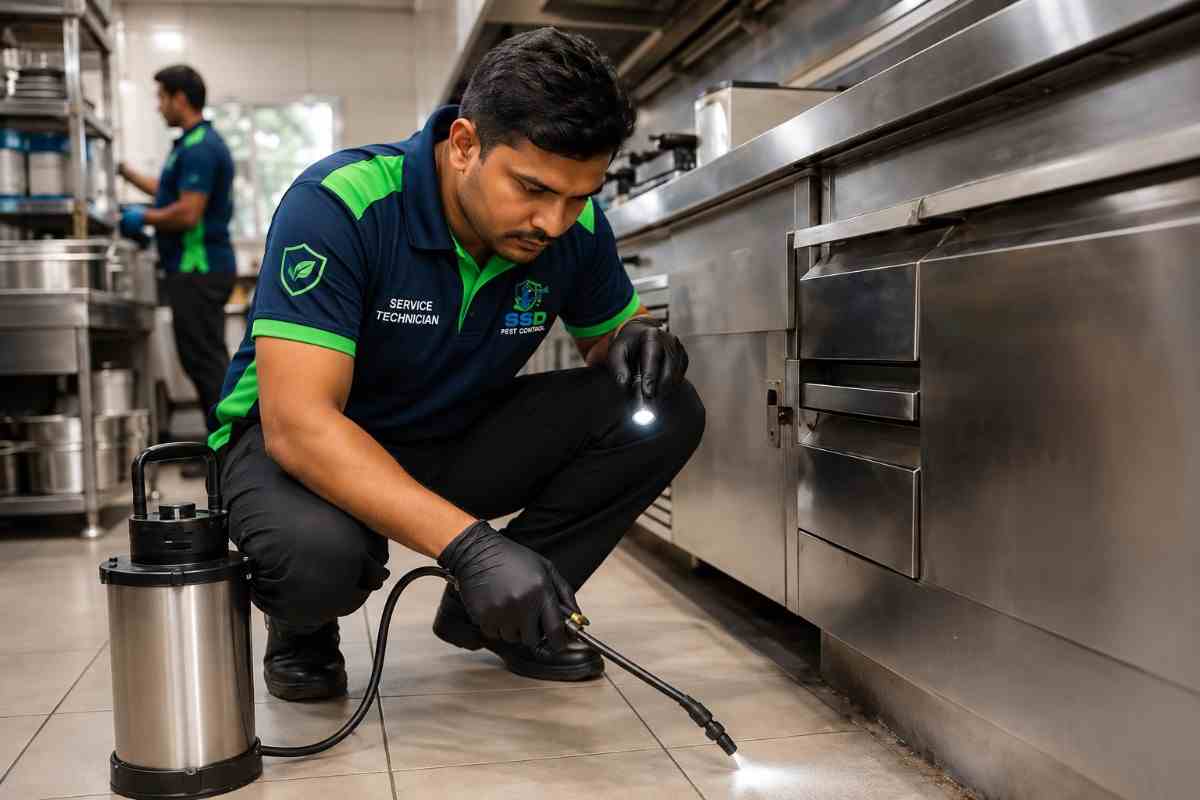 Pest Control for Restaurants
A single pest sighting in the dining area, or a failed FSSAI inspection, can shut a restaurant down or wreck its reviews overnight. Scheduled pest control built around kitchen compliance and service hours - not a one-time spray.
Learn more
Get your space pest-free
Free inspection, fixed quote, 100% satisfaction guarantee - across all 31 branches, 24×7.