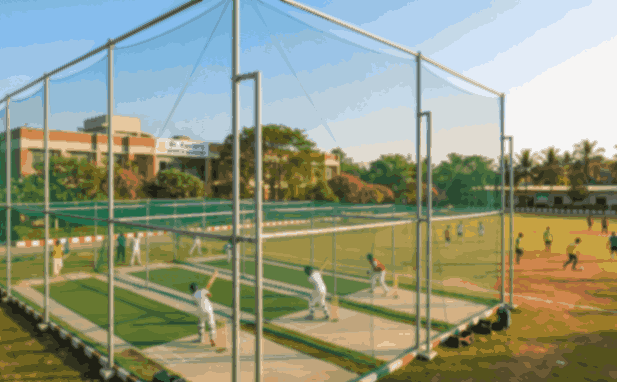
Cricket/Football Ground Net Services
Ensure a secure and professional sporting environment with our Cricket and Football Ground Net Services. Whether it's a school ground, sports academy, stadium, or private training facility, our high-quality netting systems offer optimal protection, boundary definition, and ball containment for both
- Odourless, child & pet safe
- 24×7 · 31 branches
- 100% satisfaction guarantee
Ensure a secure and professional sporting environment with our Cricket and Football Ground Net Services. Whether it's a school ground, sports academy, stadium, or private training facility, our high-quality netting systems offer optimal protection, boundary definition, and ball containment for both cricket and football applications.
Why Ground Netting Matters
In high-impact sports like cricket and football, professional netting is essential for:
Player safety
Spectator protection
Ball control and boundary management
Maintaining smooth gameplay
Our nets are designed to meet the specific demands of sporting environments, combining strength, flexibility, and long-term weather resistance.
Key Features of Our Cricket & Football Ground Nets
- High-Strength Material – Made from UV-stabilized HDPE (High-Density Polyethylene) or nylon for long-lasting performance in outdoor conditions.
- All-Weather Durability – Resistant to sun, rain, and wind – ideal for year-round use.
- Custom Sizing & Design – Tailored to fit practice nets, goalposts, side boundaries, or full enclosures.
- Tangle-Free, Easy Maintenance – Smooth finish with reinforced edges for easy installation and long-term reliability.
- Safe & Impact-Resistant – Tested to withstand high-velocity cricket balls and strong football kicks.
- Color Options Available – Typically in black or green, but customizable based on your preference.
Types of Netting Solutions We Offer
Section intro heading for the two sub-blocks below.
Cricket Net Solutions
Practice nets for academies and training grounds
Pitch side and boundary nets
Enclosure nets for full protection
Roof nets to prevent ball loss
Football Net Solutions
Goalpost nets (standard and custom sizes)
Side boundary nets
Safety nets for spectators
Field perimeter fencing
Ideal for:
Cricket & Football Academies
Schools & Colleges
Sports Clubs & Associations
Recreational Grounds
Turf and Arena Facilities
Private Residential Grounds
Why Choose Our Ground Net Services?
🔧 Expert Installation – Professionally installed by our trained team with secure anchoring and quality fittings.
- ️ Premium Materials – We use certified netting that meets industry standards for safety and performance.
🎯 Custom Fit & Finish – We assess your ground size, layout, and usage needs to design and install the perfect netting solution.
- End-to-End Service – From measurement to material selection, installation, and maintenance-everything is taken care of.
📦 Bulk Orders & AMC Available – Ongoing Annual Maintenance Contracts and volume discounts for institutions and organizations.
Build a Safer, Smarter Sporting Environment
Whether it's a professional training facility or a school playground, our Cricket and Football Ground Net Services offer unmatched reliability and protection. Keep your game safe, structured, and within bounds.
- Contact us today to schedule a site visit and receive a custom quote.
Netting Material and Mesh Grade: What Actually Holds Up
Not all sports netting is built the same, and the difference shows up the first time a hard-hit ball meets a weak point. Industry-standard sports netting is made from high-density polyethylene (HDPE) or braided nylon, woven in either a knotted or knotless diamond pattern. Knotted mesh holds its shape better under repeated high-impact strikes, which is why it's the more common choice for cricket and football grounds that see daily use, while knotless mesh is lighter and easier to work with for boundary or divider netting that takes less direct impact.
Mesh size is chosen for the object it needs to stop, not just the sport's name. A cricket ball is small, hard, and travels at high velocity off the bat, so cricket nets - especially practice and bowling nets - need a tighter weave that won't let the ball punch through or squeeze between strands. Football netting deals with a larger, softer ball moving with less concentrated force per impact, so a wider mesh can still contain it effectively while using less material and cutting wind resistance across large open perimeters. Getting this match wrong in either direction means either wasted material cost or a net that fails exactly when it's needed.
Maharashtra and Gujarat's climate is hard on netting that isn't built for it. Strong UV exposure through most of the year breaks down untreated polymer fibres, making them brittle and prone to snapping months before a properly stabilised net would need attention, and the monsoon adds sustained humidity and wind-driven rain that accelerates the same degradation while also stressing anchor points and hardware. UV-stabilised HDPE, usually finished in black or dark green to absorb rather than reflect ultraviolet radiation, is the material that consistently outlasts standard nylon in this kind of exposure, which is why it's the default choice for any ground netting meant to stay outdoors year-round rather than being taken down between seasons.
Structural Safety: Poles, Anchoring, and Tensioning
A net is only as safe as the structure holding it up. Pole height and spacing have to be calculated for the specific application - a cricket practice bay needs enough height and depth to contain a full-pace delivery or a mishit lofted shot without the ball clearing the top, while a football ground's perimeter or ball-stop netting has to cover a much wider span with fewer support points, which changes the load each pole and anchor has to carry. Treating every ground the same way, regardless of its size and use, is how nets end up either under-built for the impact they'll take or unnecessarily expensive for what they're protecting.
Anchoring matters as much as the netting itself, particularly on open grounds exposed to wind. Concrete footings are standard for permanent installations because they resist both the pull of a taut net in gusty conditions and the lateral load of monsoon storms, whereas lighter ground-spike anchoring is only appropriate for seasonal or temporary setups on smaller grounds. A pole that's structurally fine but anchored into loose or waterlogged soil is a real failure point during Maharashtra's monsoon months, when saturated ground loses much of its holding strength right when wind loads are highest.
Tensioning is what keeps a net doing its job over time rather than just on installation day. Cables, turnbuckles, or ratchet systems along the top and sides let a net be pulled taut and re-tightened later, which prevents the sagging that lets balls drop through gaps near the ground or clear a net that's lost its height. Because ground conditions, wind exposure, and existing structures vary from site to site, every installation should start with an on-site assessment before any material goes up - which is why we inspect the ground and provide a written quote before treatment or installation begins, rather than applying a standard layout to a non-standard space.
Warning Signs Your Existing Netting Needs Repair or Replacement
Netting wears gradually, and most of the warning signs are visible well before a net actually fails. Fraying at the edges, small tears that haven't yet spread, and mesh that's gone stiff or chalky to the touch are all early signs of UV and weather degradation. Discoloration - a net turning grey or losing its original black or green tint - is often the first visible clue that the fibres underneath have weakened, even when the mesh still looks structurally whole from a distance.
The hardware and structure deserve just as much attention as the mesh. Rust on clamps, hooks, or turnbuckles, poles that have started to lean, and anchor points that shift or feel loose when the net is pulled are all signs that the supporting structure - not just the netting - has been compromised, usually by a combination of monsoon moisture and repeated wind load. Sagging sections or visible gaps at ground level are a practical warning sign too: they mean tension has been lost, and a low or drooping edge is exactly where a fast-moving ball is most likely to escape.
None of these are cosmetic issues. A gap or tear in perimeter netting on a ground bordering a road, parking area, or residential building means a stray ball can reach a vehicle, a window, or a passer-by, and a leaning pole near active play is a direct injury risk to players and coaches. Schools, academies, and facility owners carry real liability for this kind of failure, which makes catching these signs early - rather than waiting for an obvious rupture - the more practical approach for any ground in regular use.
Maintenance and Seasonal Care to Extend Net Life
Netting that's inspected and adjusted regularly lasts substantially longer than netting left alone until something breaks. A basic visual check - looking for slack sections, fraying, and loose hardware - is worth doing before the start of each cricket or football season and again after the monsoon, since sustained rain and wind are the period most likely to shift anchor points or stretch tensioning cables out of adjustment. Catching a loosened knot or a slightly sagging panel at this stage is a small fix; left unaddressed through another season of use, the same issue often becomes a full section replacement.
Routine maintenance itself is straightforward but easy to skip without a schedule: re-tensioning cables that have stretched, clearing algae, dust, or debris buildup that adds weight and traps moisture against the mesh, checking clamps and turnbuckles for corrosion, and retying or replacing any knots that have worked loose. On open grounds this upkeep matters more than it does for netting used indoors or under cover, simply because there's more direct weather exposure to account for.
This is also where having a maintenance plan in place, rather than reacting after damage appears, makes the most practical difference - which is the reasoning behind offering AMC (Annual Maintenance Contract) plans for recurring inspection and upkeep rather than one-off installation alone. With branches across Maharashtra and Gujarat and 24x7 availability, storm damage or a sudden tear can be assessed and addressed quickly instead of leaving a ground with compromised netting until the next scheduled visit.
Related services
All 21 services →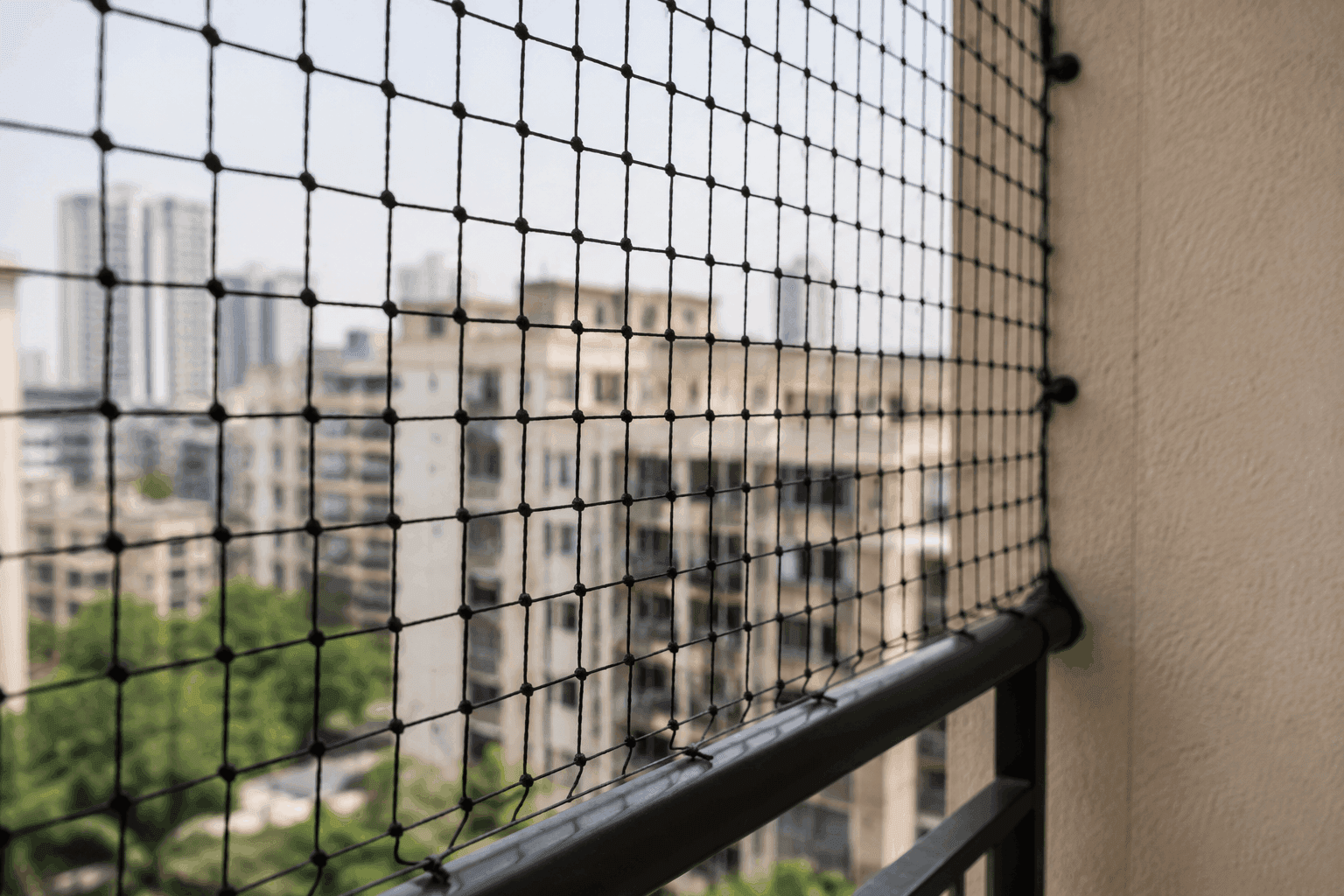 Bird Netting Services
Birds may seem harmless, but when they start nesting or perching around your property, they can cause serious hygiene, safety, and maintenance issues. At SSD Pest Control Services Pvt. Ltd., we provide premium Bird Netting Services to protect homes, offices, factories, and buildings from bird-relate
Learn more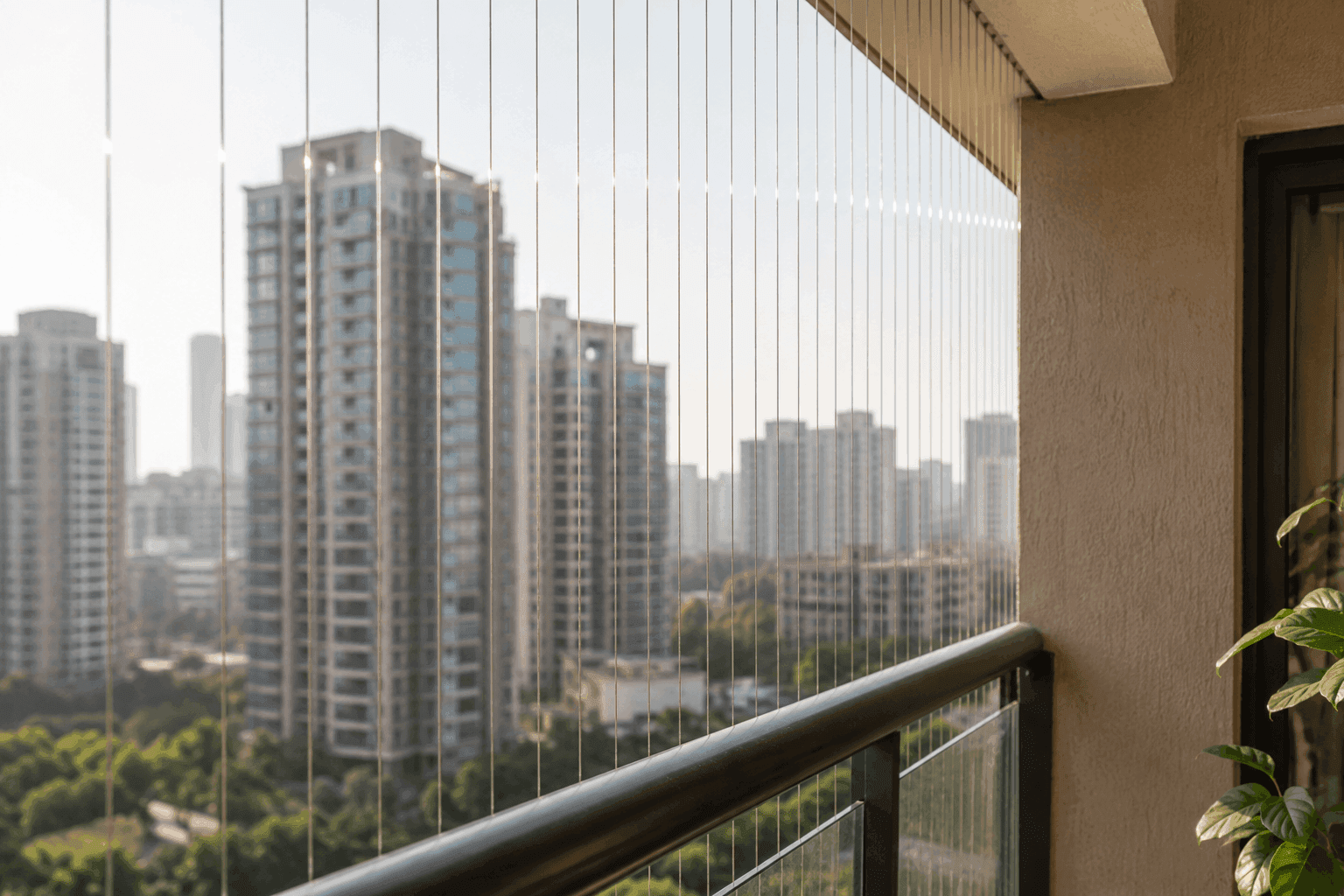 Invisible Grill Services
Protect your home or office without compromising your view. Our Invisible Grill Services provide a modern, sleek, and secure alternative to traditional window grills. Whether you're in a high-rise apartment, office, or villa, invisible grills offer unmatched safety while maintaining a clean and eleg
Learn more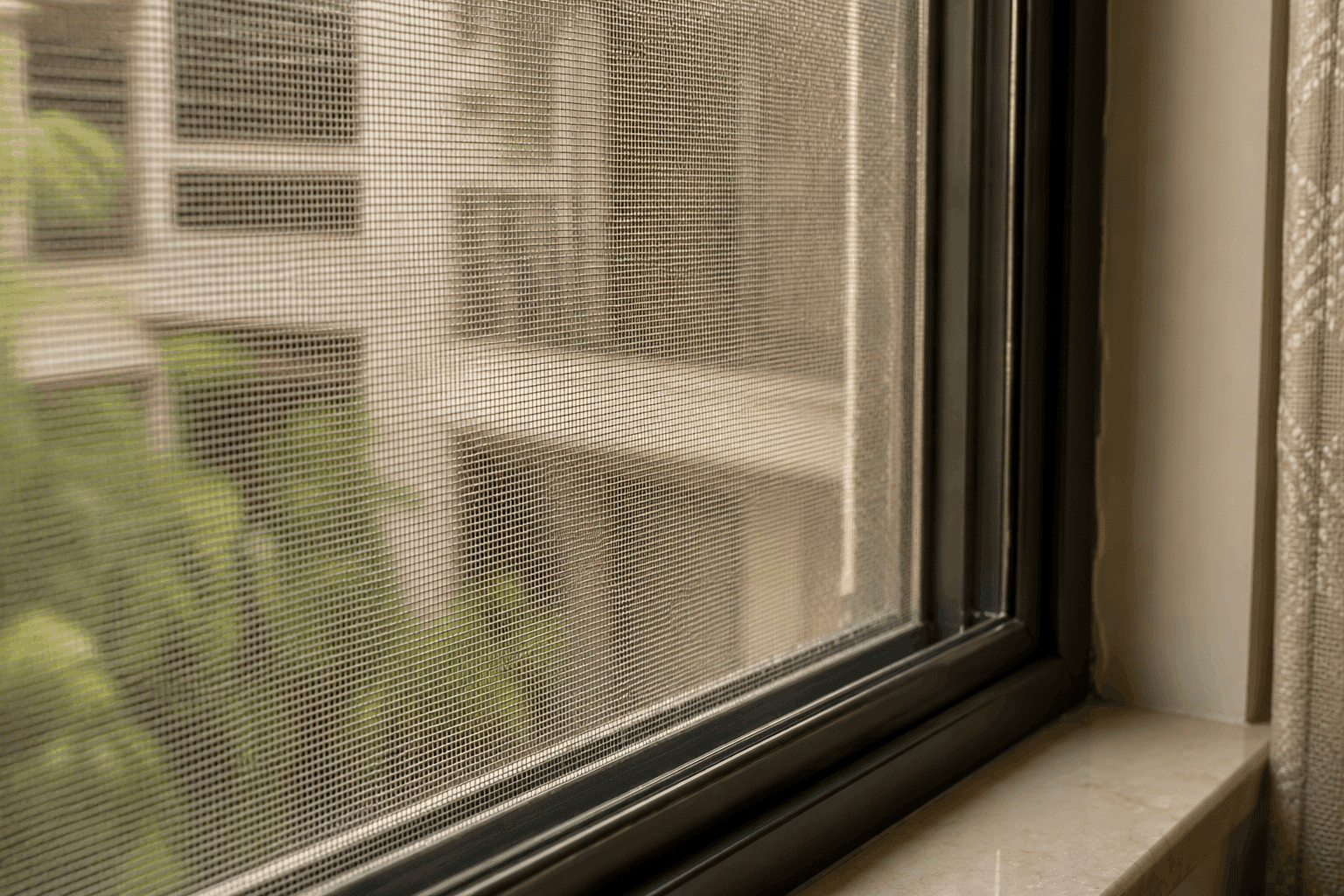 Mosquito Net Services
Say goodbye to mosquitoes, flies, and other insects-without compromising on aesthetics or ventilation. Our Mosquito Net Services offer a sleek, space-saving solution to protect your home or office while allowing natural airflow and clear outside views.
Learn more
Get your space protected
Free inspection, fixed quote, 100% satisfaction guarantee - across all 31 branches, 24×7.